The Importance of Puppy Classes for Socialization and Confidence Building
Published on February 1, 2025

The Socialization Window Is Short
Every puppy passes through a critical developmental period (roughly between eight and sixteen weeks of age) during which its brain is uniquely wired to absorb new experiences and form lasting impressions about the world. Behaviorists call this the socialization window or the sensitive period, and what happens during these weeks has an outsized influence on the adult dog the puppy will become. Positive, varied exposures during this time produce a dog that approaches new people, animals, environments, and situations with curiosity rather than fear. Insufficient or negative experiences produce a dog that defaults to avoidance, anxiety, or aggression when confronted with anything unfamiliar. The window does not stay open indefinitely, and missed opportunities during this period are difficult (though not impossible) to compensate for later.
What Proper Socialization Actually Requires
Socialization is often misunderstood as simply letting a puppy interact with other dogs. In practice, effective socialization is far broader and more deliberate. It involves controlled, positive exposure to a wide range of stimuli: people of different ages, sizes, and appearances; other dogs of various breeds and temperaments; novel surfaces like grates, gravel, and slippery floors; household sounds like vacuum cleaners and doorbells; unfamiliar objects like umbrellas, strollers, and hats; and experiences like being gently restrained, having paws handled, and having ears examined.
Dr. Ian Dunbar, one of the most widely cited authorities on puppy development, recommends that a puppy meet at least one hundred different people in its first month at home. A study conducted by veterinary researchers at the University of Guelph revealed that roughly a third of puppies surveyed across North America had very limited contact with unfamiliar people and animals beyond the household, encountering fewer than six dogs and no more than ten people within a fourteen-day span. That level of exposure falls far short of what developing puppies need. The same study found that puppies who attended group classes were exposed to significantly more dogs, adults, and children than those who did not, making classes one of the most efficient pathways to adequate socialization.
How Puppy Classes Deliver Socialization
A well-designed puppy class creates a controlled environment where socialization happens systematically rather than by chance. Supervised off-leash play allows puppies to practice critical social skills (reading body language, calibrating play intensity, learning bite inhibition, and recovering from mild social conflicts) under the guidance of a trainer who can intervene if interactions become overwhelming or inappropriate. This supervised structure is fundamentally different from, and far safer than, the uncontrolled dynamics of a dog park, where an undersocialized adult dog can traumatize a young puppy in seconds.
Beyond dog-to-dog interaction, good puppy classes incorporate handling exercises that prepare puppies for grooming and veterinary care. Short, repeated exposures to gentle restraint, mouth inspection, paw handling, and ear touching build tolerance for the kinds of physical contact the dog will encounter throughout its life. Puppies that learn to accept handling calmly during the socialization window are far less likely to become fearful or reactive at the veterinarian’s office or grooming salon as adults, a practical benefit that reduces stress for the dog, the owner, and the professionals involved.
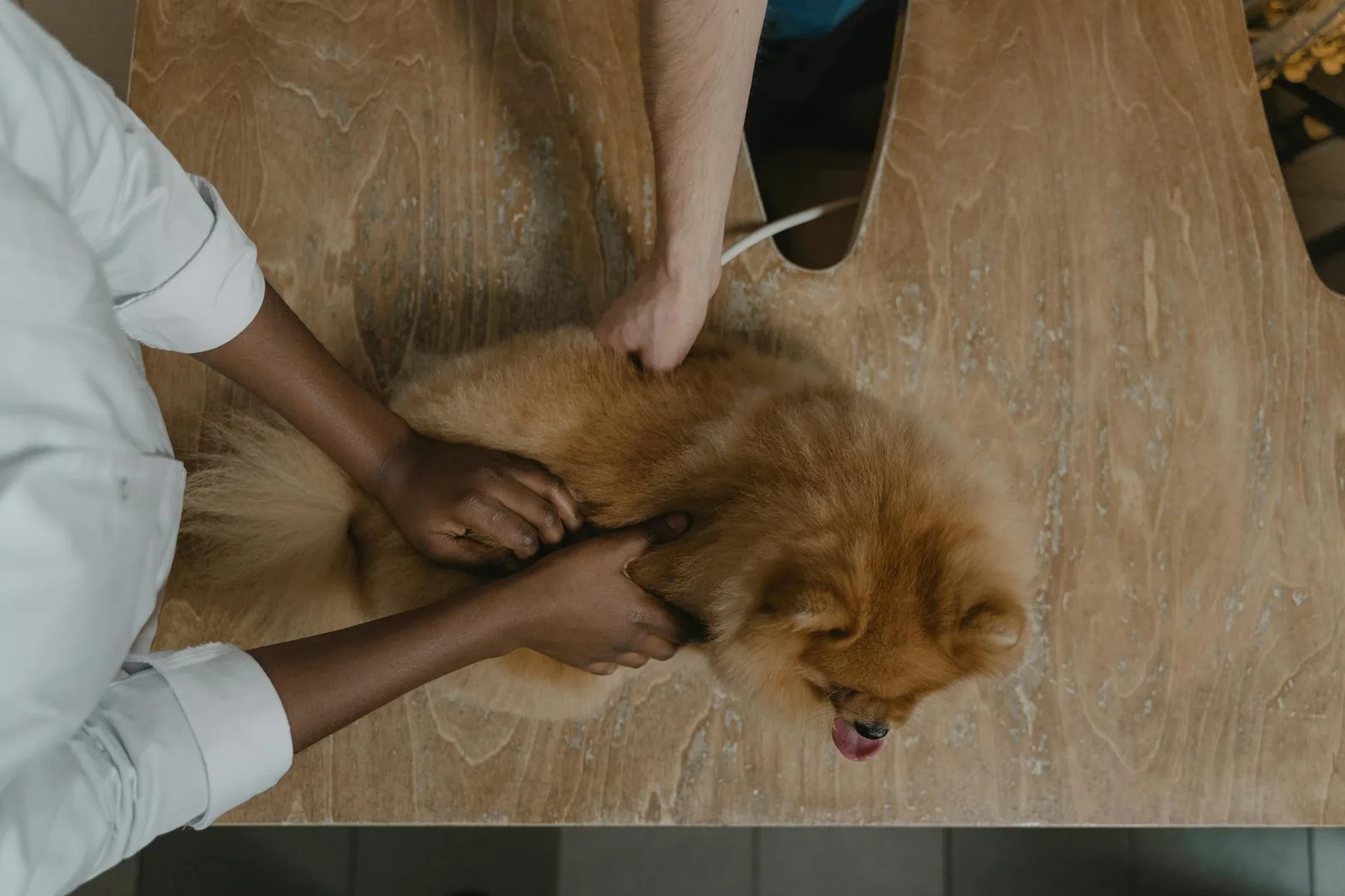
Classes also expose puppies to a rotating cast of unfamiliar people (other owners, assistants, visitors) and to environmental novelty in the form of different surfaces, obstacles, sounds, and visual stimuli. Each positive experience during this window adds a data point to the puppy’s developing understanding of the world, and the cumulative effect is a dog that approaches novelty with confidence rather than suspicion.
The Connection Between Socialization and Confidence
Confidence in dogs is not an innate personality trait so much as a learned disposition that develops through experience. A confident dog is one that has encountered a sufficient variety of situations and discovered, through repeated positive outcomes, that new things are generally safe and manageable. This confidence creates a self-reinforcing cycle: a confident puppy approaches a new stimulus, receives a positive outcome (a treat, praise, play, or simply the absence of anything scary), and becomes more willing to approach the next new thing. Over time, this pattern produces a dog that is adaptable, resilient, and comfortable in a range of settings.
Puppy classes build confidence through graduated exposure. A good instructor introduces challenges at a level the puppy can handle, rewards successful engagement, and avoids pushing past the point where the puppy becomes overwhelmed. This approach, sometimes called systematic desensitization or, more casually, “setting the puppy up to succeed,” teaches the puppy that unfamiliar situations are opportunities rather than threats. The group environment adds an additional confidence-building element: puppies observe other puppies interacting with novel stimuli, and social learning allows hesitant individuals to draw courage from the behavior of their more adventurous classmates.
Research supports this connection directly. A study published in the Journal of Veterinary Behavior found that puppies and juveniles who attended structured classes scored significantly better on measures of nonsocial fear and touch sensitivity as adults, indicating that class attendance produced lasting reductions in fearfulness. The Tufts University survey found that dogs trained before six months of age were significantly less likely to develop fear or anxiety symptoms in adulthood, reinforcing the link between early structured experience and long-term emotional resilience.
What Happens Without Adequate Socialization
The consequences of insufficient socialization are well documented and often severe. Dogs that miss the socialization window are significantly more likely to develop fear-based behavior problems, including generalized anxiety, noise phobias, fear of strangers, fear of other dogs, and reactive or aggressive responses to unfamiliar stimuli. These behaviors are among the most difficult to modify in adult dogs and frequently require the intervention of a veterinary behaviorist, sometimes in combination with medication.
Fear-based behavior problems also have practical consequences that affect daily life. A dog that is fearful of strangers cannot comfortably accompany its owner to outdoor restaurants, parks, or social gatherings. A dog that is reactive toward other dogs turns every walk into a stressful management exercise. A dog that panics at the veterinarian requires sedation for routine care. These limitations reduce the dog’s quality of life, strain the owner’s patience and resources, and are a leading factor in the decision to surrender a dog to a shelter. Studies have consistently shown that owners who invest in early training and socialization are significantly more likely to keep their pets for the animal’s full lifespan.
The Role of Positive Methods in Building Confidence
The training methods used during the socialization period matter as much as the experiences themselves. Positive reinforcement-based training (rewarding desired behavior with food, praise, or play) builds trust between puppy and owner and teaches the puppy that engaging with the world produces good outcomes. Punishment-based methods, by contrast, introduce an element of unpredictability and discomfort that can undermine the very confidence socialization is designed to build. Research cited by the American Kennel Club found that owners who used punishment reported more fearful behavior in their puppies, while those attending classes that relied on positive methods saw increased confidence and reduced anxiety.
A skilled instructor models these methods for owners and provides real-time coaching on timing, reward delivery, and reading the puppy’s body language. This education component ensures that the principles learned in class carry over into daily life, where the vast majority of the puppy’s learning actually takes place. The class itself provides the framework and the tools; the owner’s consistent application of those tools at home is what produces a confident, well-socialized adult dog.
Making the Most of the Window
The socialization window is brief, and the weeks pass quickly. Enrolling in a puppy class as early as eight weeks (once the puppy has received its first round of vaccinations) maximizes the time available for structured socialization. Supplementing class attendance with daily exposure to new people, places, sounds, and experiences at home and in the community amplifies the effect. The goal is not to overwhelm the puppy with stimulation but to provide a steady, positive stream of novel experiences that builds the neural pathways associated with curiosity, adaptability, and calm engagement with the world.
The investment of time and effort during these early weeks pays returns for the entire life of the dog. A well-socialized, confident dog is easier to live with, safer to be around, and able to participate fully in the activities and adventures that make the human-animal bond so rewarding.
Feature photo by Sudhir Sangwan on Pexels.
Further reading (sources)
- American Veterinary Society of Animal Behavior on why early puppy classes are worth the vaccination trade-off
- American Veterinary Medical Association for the sensitive period and when exposure should begin
- American Veterinary Society of Animal Behavior with the position statement on humane, reward-based training