Training Apps vs Puppy Class: When Each Works and How to Combine Them
Published on June 19, 2026
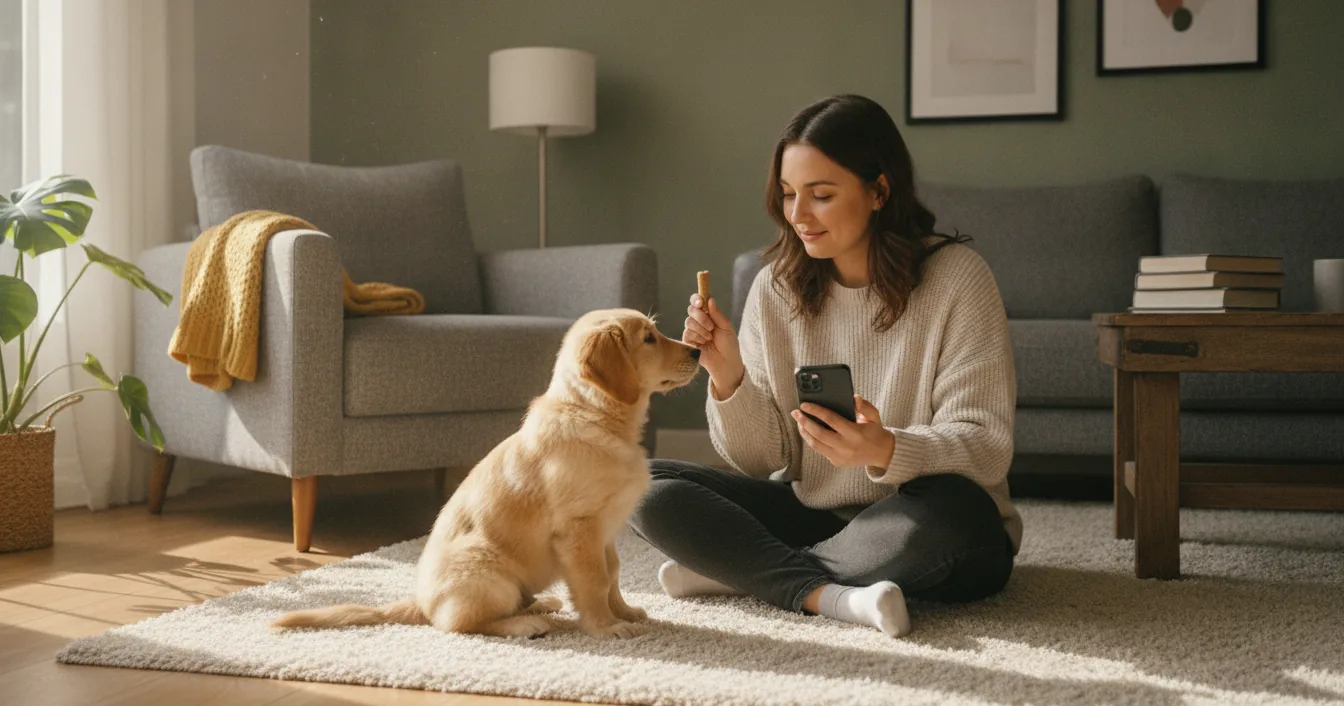
A new puppy arrives, the to-do list is enormous, and somewhere in the late-night research a tempting shortcut appears: skip the class, download an app, and train from the couch. Apps like GoodPup, Pupford, and Dogo promise a full curriculum on your phone for a fraction of what in-person training costs. They are genuinely useful tools, and the good ones are built on the same force-free methods I recommend. They are also not a replacement for a quality puppy class, and treating them as one means missing the part of early training that matters most. Here is an honest look at what each format does well and how to use them together.
What Training Apps Do Well
Modern training apps are better than most owners expect. The good ones are built on positive reinforcement, break skills into short daily lessons, and turn vague good intentions into a schedule you actually follow.
- Cue mechanics. Apps walk you through luring a sit, shaping a down, or building a recall one small step at a time, usually with video demonstrations you can replay until the timing clicks.
- Accountability. A daily reminder and a progress streak keep training from sliding off the calendar. Five focused minutes a day beats a forgotten hour on the weekend, and an app is good at protecting that habit.
- Reference on demand. When your puppy invents a brand-new problem at nine at night, a searchable library beats guessing or scrolling through unvetted videos.
- Cost. Self-paced subscription apps typically run ten to forty dollars a month, far less than a course of private sessions. We break down the full price picture in how much puppy classes cost.
For practicing what your puppy already half-knows, reinforcing cues between class nights, and keeping a busy household consistent, an app earns its place on your phone.
A Quick Look at the Popular Apps
The three names owners ask about most sit at different points on a spectrum.
GoodPup is the most class-like of the three. It pairs you with a real trainer for weekly one-on-one video sessions, so a human watches you work and corrects your timing in real time. That live feedback is its biggest advantage, and its higher subscription price reflects it.
Pupford leans on a large library of self-paced video courses, including a popular free 30-day foundation program. It is strong reference material and light on personalized feedback.
Dogo sits in between. It offers structured step-by-step programs, a built-in clicker, and homework you can submit for review, and it gamifies the daily habit well.
All three are built on reward-based, force-free methods, which is the first thing I check for in any training product. What separates them is how much live, individualized coaching you get, and that distinction is exactly where the limits of the app model begin to show.
Where Apps Hit a Wall
An app can teach your puppy what “sit” means. It cannot do the three things that define a quality puppy class.
The first is socialization. The window for shaping how a puppy feels about other dogs, strangers, handling, and novelty runs from roughly three to sixteen weeks of age, and it closes whether or not anyone took advantage of it. A screen cannot give your puppy supervised, well-matched play with other puppies, and no app can manufacture the dozens of safe, positive encounters that build a confident adult dog. This is the single biggest reason not to rely on an app alone, and it is the heart of why early socialization matters so much.

The second is reading body language. A skilled instructor watches your puppy and every other dog in the room and catches the quiet early signals: the lip lick, the freeze, the play that has tipped from balanced to bullying. Those moments pass in a second or two, and they are easy to miss when you are focused on your own puppy. Knowing when to step in is a learned skill, and a class teaches it by doing. Our guide to reading other dogs’ body language shows just how subtle those signals are.
The third is real distraction. Your living room is the easiest training environment your puppy will ever face. A group class puts a reliable sit to the test in a room full of new smells, noise, and other puppies, and that pressure is the only thing that turns a cue into something dependable out in the world. Even GoodPup’s live video, helpful as it is, still watches your puppy in the same quiet room every week.
What the Live Group Adds
Put simply, a class is the practice environment an app cannot simulate. The other puppies are the curriculum, not a distraction from it. Your puppy learns to settle near strangers, to take a treat from a new person’s hand, to recover after a clumsy greeting, and to keep one ear on you when the world is genuinely interesting. You, meanwhile, get a trainer who can physically adjust your leash handling and your reward timing on the spot, which is something no video can do for you.
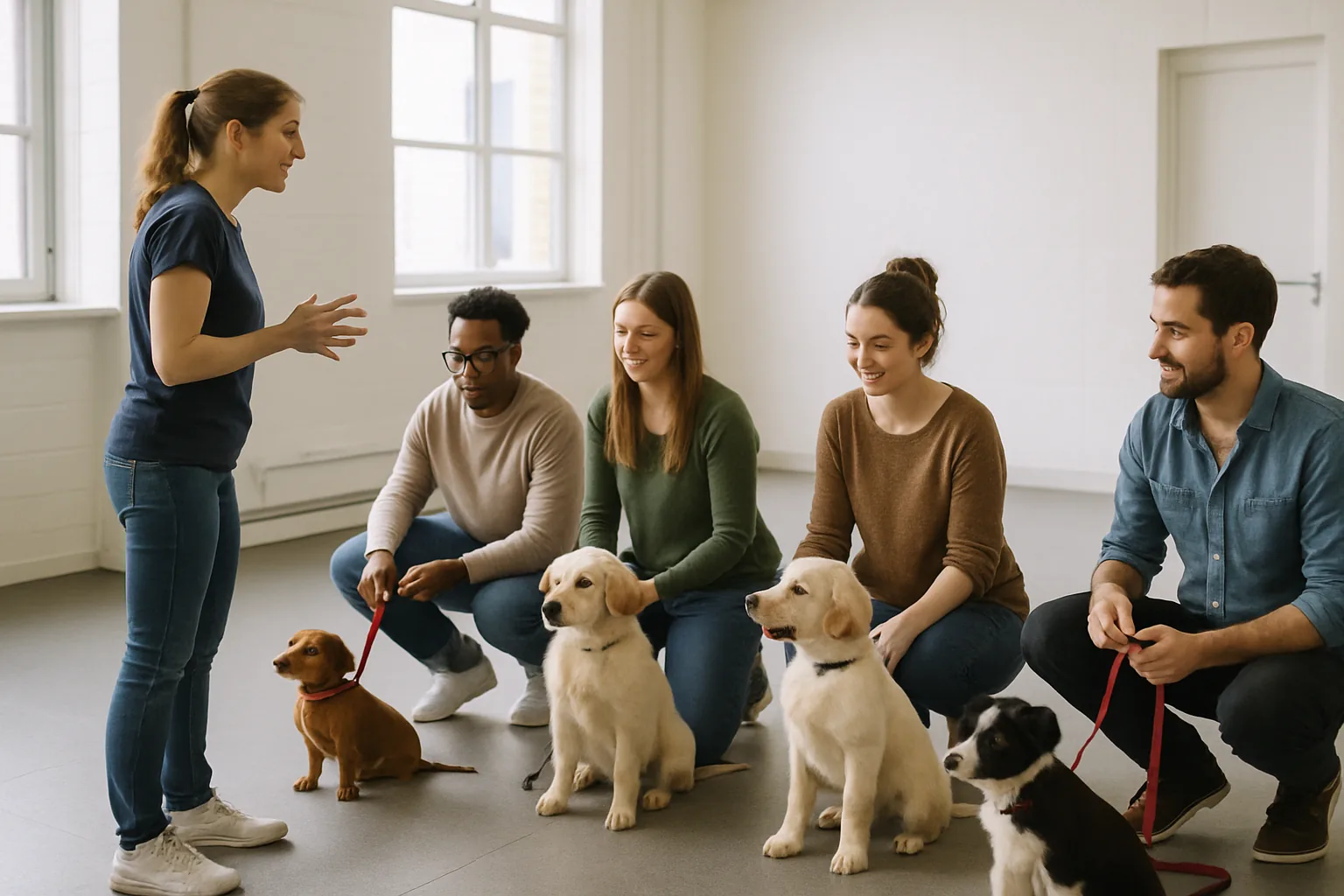
A class is also where an entire household can learn the same rules at the same time, so the puppy is not getting one set of signals from you and a different set from the kids. That consistency matters more than most owners expect, and we cover it in bringing a puppy home to a family with kids.
The Best of Both
The strongest approach is not app or class. It is app and class, each doing what it does best.
- Enroll in a group class during the socialization window, ideally as soon as your veterinarian clears your puppy to attend. Time is the one resource you cannot buy back later.
- Use an app for daily homework between sessions. Practice the week’s cue in short reps, track your streak, and carry your questions back to class.
- Treat live-trainer apps like GoodPup as a supplement or a bridge, not a substitute, especially if you live somewhere rural with no class within driving distance. Live video coaching is real coaching. It simply cannot supply other puppies.
- Reserve private, in-person help for specific problems. If your puppy shows genuine fear or aggression, set the app and the group class aside for that issue and consult a certified veterinary behaviorist.
Choosing an App Worth Your Time
Because dog training is unregulated in most states, an app is only as good as the methods behind it. Before you subscribe, confirm the content is built on positive reinforcement and that any live trainers hold real credentials from a body like the Certification Council for Professional Dog Trainers, the Karen Pryor Academy, or the IAABC. Walk away from anything that promises fast results through corrections, “dominance,” prong collars, or shock. The convenience of an app is never worth teaching your puppy through fear. When you go looking for the in-person class to pair it with, our guide to choosing a puppy class covers the markers of a good one.
The Bottom Line
Training apps are a fine tool and a poor master. They make cue practice easier, keep you consistent, and cost little, which makes them an excellent companion to a real class. What they cannot do is socialize your puppy, read a room full of dogs, or test a cue against real distraction during the narrow window when those experiences shape who your dog becomes. Download the app if it helps you stay on track. Just do not let it talk you out of the class.
Further reading (sources)
- Business Insider on testing the best dog training apps at home
- American Veterinary Medical Association for why early puppy socialization and class matter
- American Veterinary Society of Animal Behavior with its position statement on puppy socialization
- Certification Council for Professional Dog Trainers on what a trainer’s certification actually means