Week-by-Week Puppy Milestones From 8 to 16 Weeks
Published on June 10, 2026
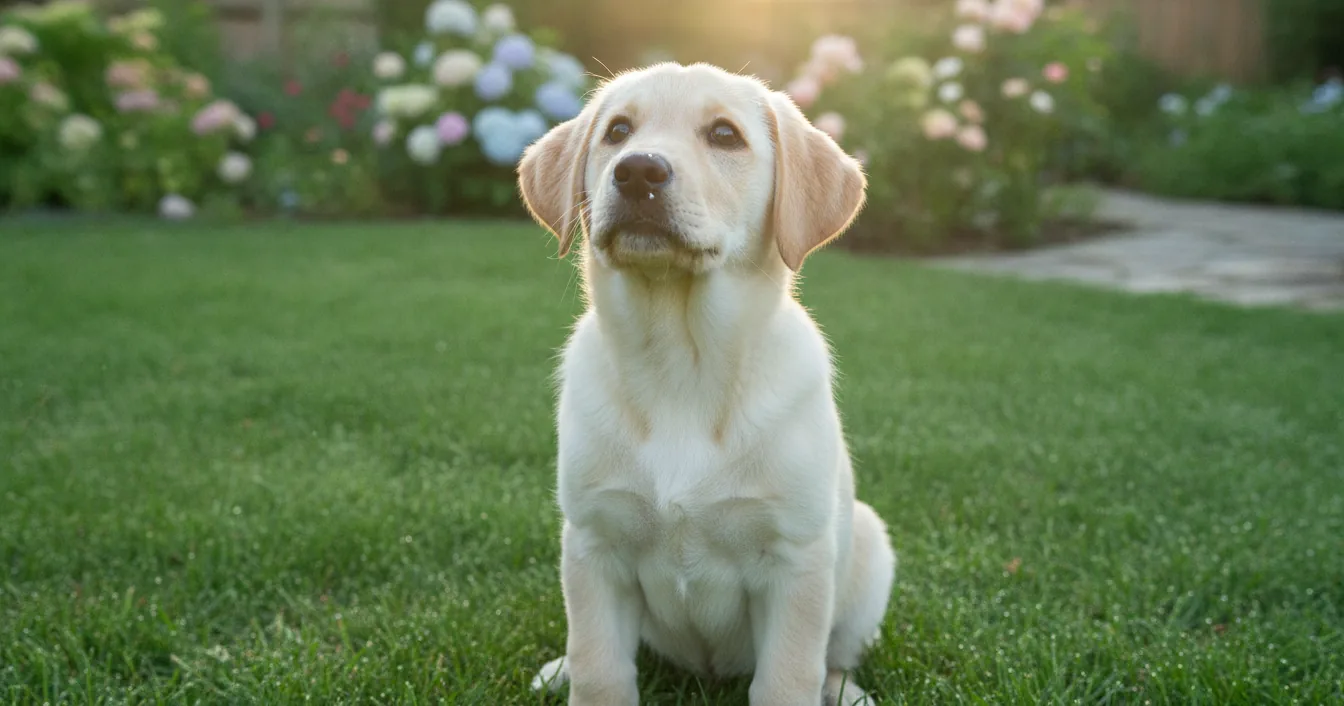
The socialization window does not feel urgent until you do the math. A puppy that comes home at eight weeks has roughly eight weeks of prime developmental runway left before the sensitive period starts to close, and a good share of that time is spent eating, sleeping, and growing. “Socialize your puppy” is sound advice that tells you almost nothing about what to do on a Tuesday. What follows is the version that does: a week-by-week map of what to work on, what to expose your puppy to, and what should be reliably in place before the calendar runs out.
A note on how to read it. These are guideposts, not deadlines. Puppies develop at their own pace, breed and temperament shift the timing, and a bold herding pup and a cautious giant-breed pup will not hit the same marks in the same week. Use the ranges to stay oriented, not to panic. For the reasoning behind the window itself, see the case for early socialization and confidence building.
Week 8: Arrival, Safety, and Easy Wins
Eight weeks is when most puppies leave the litter, and the first job is not training. It is safety and trust. Puppy-proof the house, decide where the crate lives, and start a potty routine: outside first thing in the morning, after every nap, after meals, and after play. A rough bladder guide is one hour of hold time per month of age plus one, so an eight-week puppy needs an outing roughly every three hours, overnight included.
Week eight also opens the first fear period (roughly weeks eight to eleven), when a single bad scare can leave a lasting impression. That is the case for gentle rather than bold. Introduce new surfaces, sounds, and people, but keep every exposure low-key and let the puppy choose to approach. Start name recognition, hand-feed part of each meal so your puppy learns you are the source of good things, and begin brief cooperative-care touches (paws, ears, mouth) paired with a treat. Keep physical exercise tiny, about five minutes per month of age, with play counting toward the total.
Week 10: Class Begins and Names Get Real
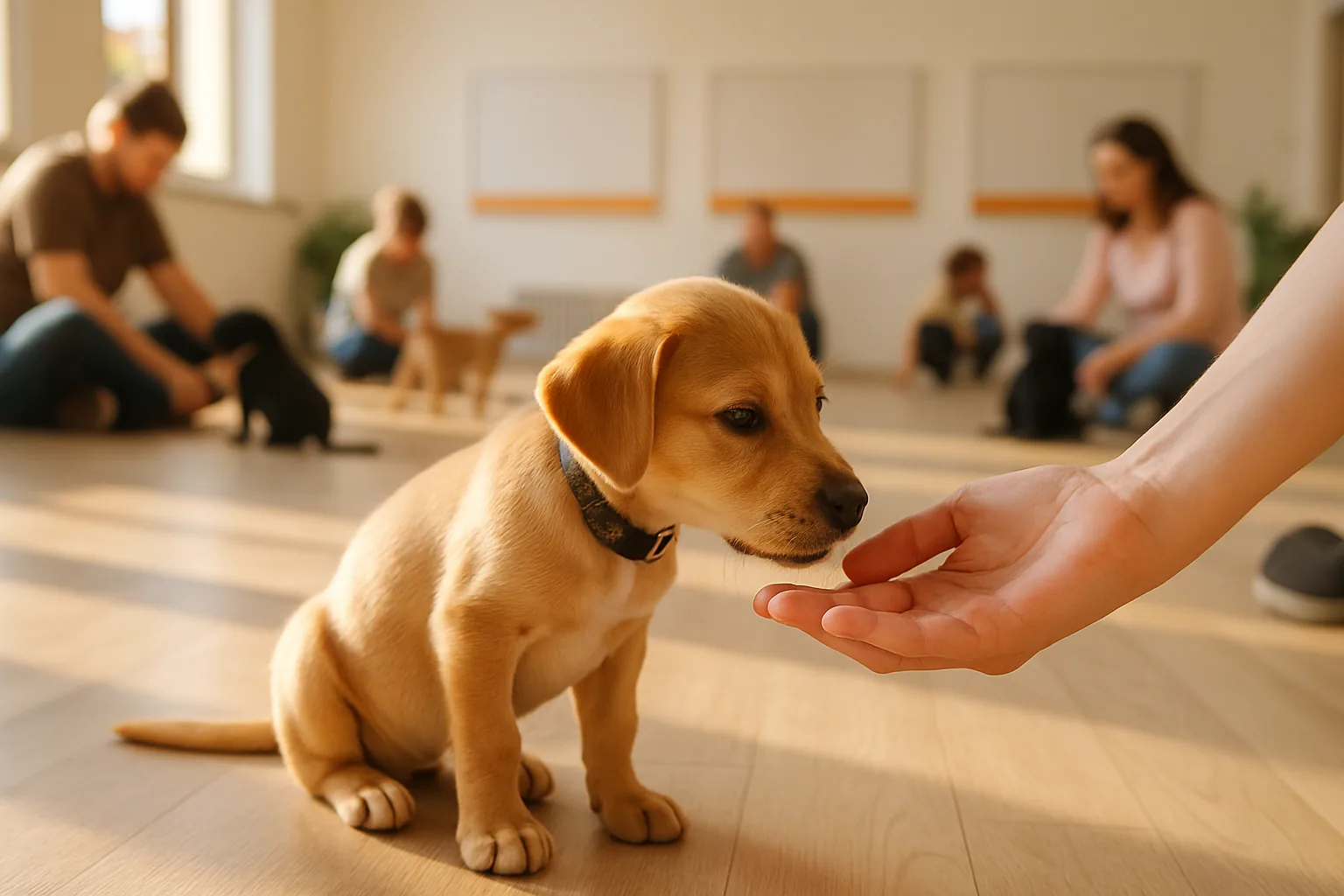
Once your puppy has had its first vaccinations, this is the moment to enroll. The veterinary consensus, set out in the American Veterinary Society of Animal Behavior position statement, is that the behavioral payoff of early class outweighs the small, manageable disease risk for a vaccinated puppy on clean indoor surfaces. A good class layers supervised play, handling practice, and the first real distractions on top of what you are already doing at home. If you have not chosen one yet, vet the trainer’s methods and credentials first.
Skills to have moving by week ten: a lured sit, the beginning of a name-response “look at me,” and a settle on a mat. None of these need to be polished. They need to exist. The bigger goal is socialization breadth, so aim for new positive experiences daily, with people of different ages and appearances, varied surfaces, and ordinary household noise. Supervised puppy play is also where bite inhibition develops, which is arguably the single most valuable thing a young puppy learns, so let your puppy mouth its classmates and let the yelp-and-pause of play teach that teeth end the fun.
Week 12: Skills Travel and the World Gets Bigger
By twelve weeks most puppies are out of the first fear period and into a bolder, more confident stretch, and you will see it in their body language. This is when skills should start to travel. A sit that only works in the kitchen is not a sit yet, so ask for it in the yard, on a walk, and in the lobby before class. Add a recall foundation (a fun, never-punished “come” with a high-value payoff) and introduce loose-leash walking as a game rather than a march.
Exposure shifts from quantity to quality here. Your puppy has met people; now it should meet them in more contexts: someone in a hat, someone with an umbrella, a person on a bike, a calm older dog. This is also the age to start reading the room. Learning to tell real play from a pushy interaction protects your puppy from exactly the kind of bad experience the developing brain files away and keeps.

Week 14: Proofing, Polish, and the Closing Window
Fourteen weeks sits near the far edge of the classic socialization window, and the work changes tone from “introduce” to “proof and protect.” Anything your puppy has not yet met in a good way should move up the priority list now, because the cost of a first bad impression climbs as the window narrows. Keep sessions short and keep winning.
By now the core cues (sit, down, name response, and the start of stay and recall) should be reliable in quiet settings and emerging in busier ones. If your puppy still refuses food or freezes in class, that is worth solving rather than waiting out. A structured desensitization plan run alongside class is the usual fix, and a reward your puppy genuinely wants is half the battle (here is how to find it).
Week 16: What Should Be Locked In
Sixteen weeks is the practical close of the prime window. You are not finished, since adolescence will test everything you have built, but the foundation should be in place. A reasonable checklist for a well-started sixteen-week puppy:
- Comfortable, curious responses to a wide range of people, surfaces, sounds, and everyday objects.
- Solid bite inhibition: a soft mouth and the ability to disengage.
- A lured or cued sit and down, a reliable name response, and a recall that is fun rather than a gamble.
- Calm acceptance of handling: paws, ears, mouth, collar grabs, and brief restraint.
- A start on crate comfort and a predictable potty routine, with accidents tapering off.
- At least one positive vet visit and one positive grooming-style handling session on the books.
Missing a few of these is not a failure. It is a to-do list for the weeks just after. What you cannot get back is the window itself, which is why front-loading the easy exposures in weeks eight through twelve pays off so well later.
A Few Red Flags That Outrank the Timeline
No milestone chart overrides a puppy that is telling you it is struggling. Persistent fear, growling or snapping when approached or handled, fear directed at its own family rather than outside triggers, or fear that spreads to new things faster than you can counter it all warrant a professional, not another week of the same plan. A board-certified veterinary behaviorist (a DACVB) can rule out medical causes and design a plan, and the earlier in this window you act, the better the odds. For everything short of that, the ordinary roadmap above, run with patience and good treats, is what turns an eight-week stranger into a confident four-month-old.
Further reading (sources)
- American Kennel Club on a breeder-informed puppy milestone timeline
- American Veterinary Society of Animal Behavior for why socialization should start before the vaccine series is finished
- American Veterinary Medical Association with an overview of the canine sensitive period
- American Veterinary Medical Association with the literature review on socializing puppies and kittens
- AAHA for recognising fear and anxiety in a young dog