Bringing a Puppy Home to a Family With Kids: Safety, Bonding, and Class
Published on June 17, 2026
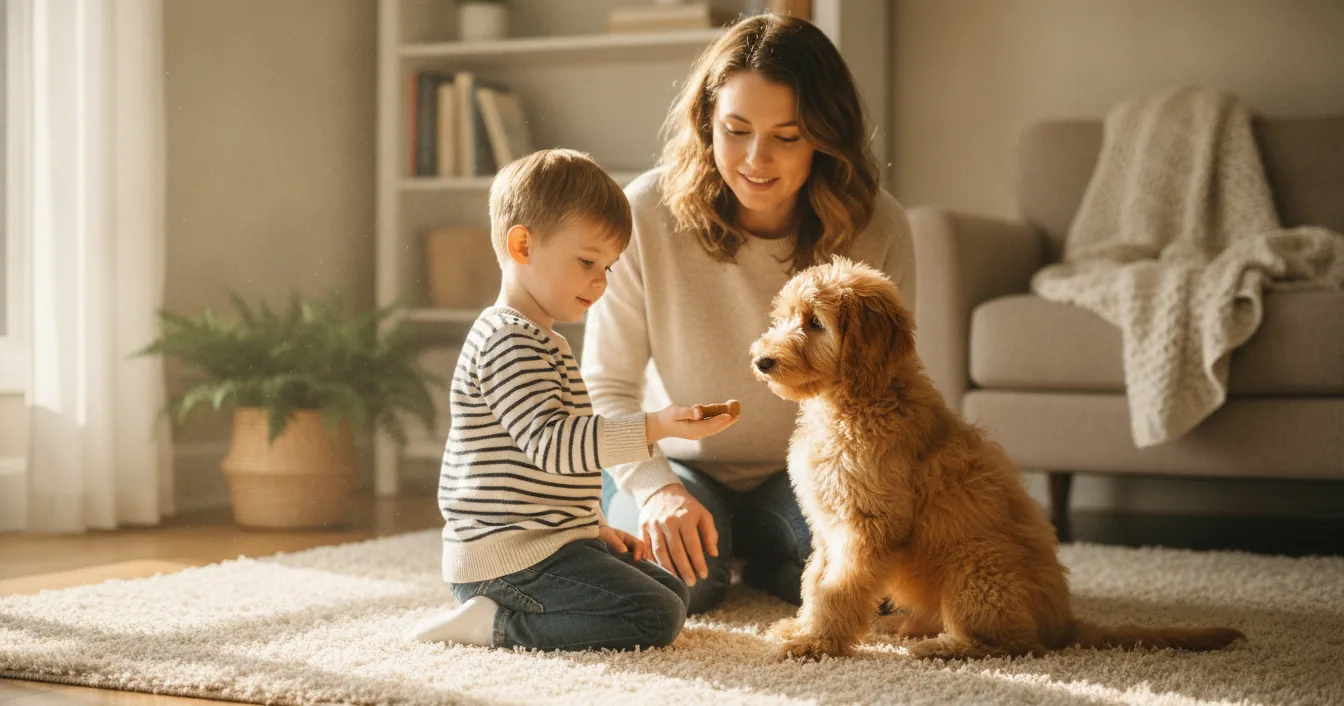
The Bond Is Real, and So Is the Bite Risk
A child growing up with a dog gains something measurable. The veterinary literature is clear that a well-managed relationship between a kid and a pet supports self-esteem, emotional attachment, and cognitive development, and it gives a child a daily lesson in empathy and responsibility. Parents feel this instinctively, which is why so many bring a puppy home in the first place.
The same research is just as clear about the other side. Bites, knocked-over toddlers, scratches, and the occasional shared infection are genuine risks, and children are the population most likely to be bitten by a dog. The reassuring part is that almost every one of these incidents is preventable. The risk factors fall into three buckets: the child (too young to read a dog, unsupervised, or handling the puppy roughly), the environment (tight spaces with no escape route), and the dog (frightened, in pain, or never taught that small humans are safe). You influence all three. What follows is a force-free roadmap for the first six weeks, built so the bond grows and the bite never happens.
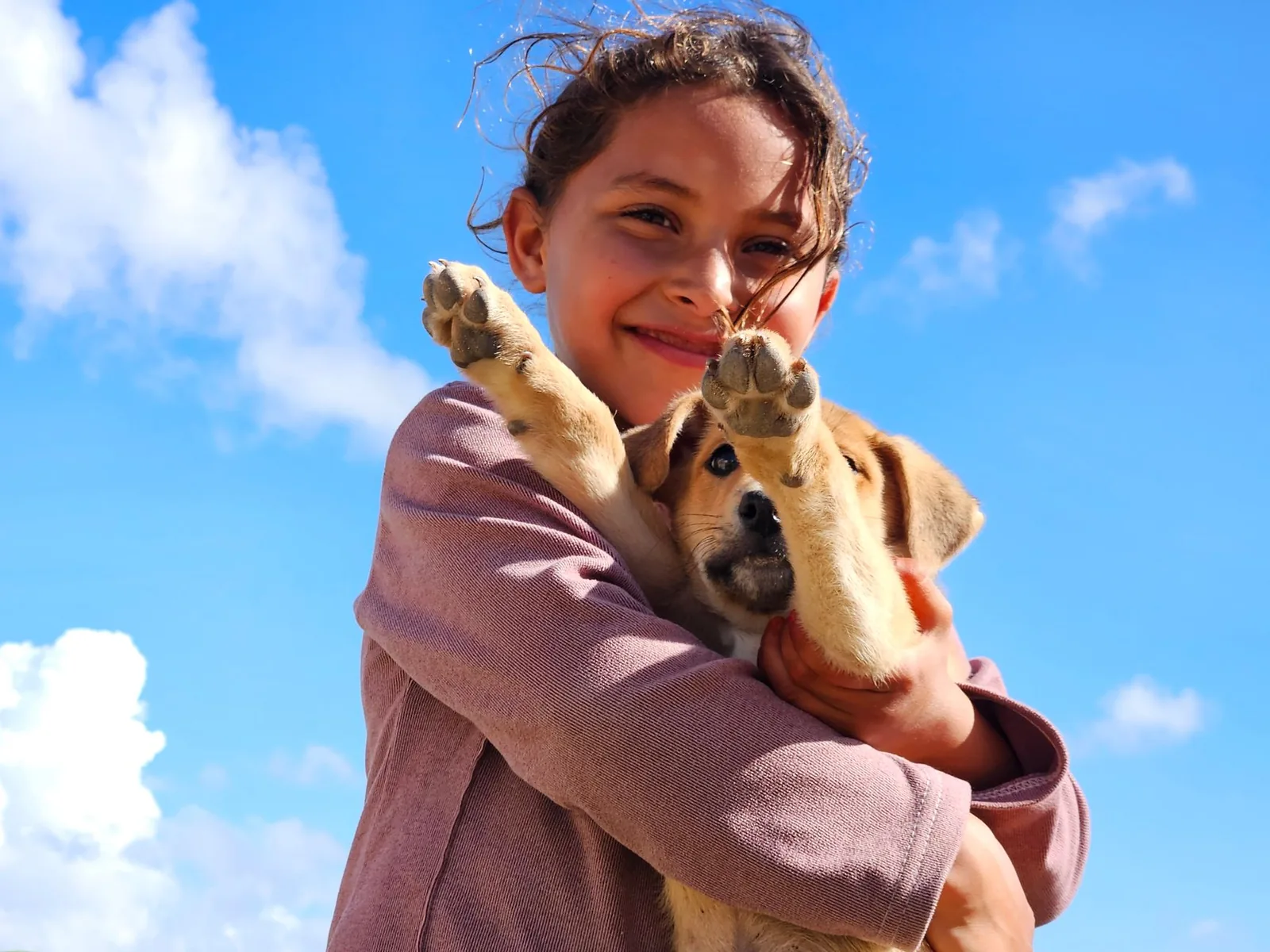
The First Two Weeks: A Quiet Arrival, Not a Welcome Party
The instinct to introduce the new puppy to every cousin and classmate on day one is the first thing to resist. A puppy that has just left its mother and littermates is flooded with new sights and smells, and a crowd of excited children is overwhelming, not joyful. Plan a calm arrival with one or two people, and let the puppy explore on its own four feet rather than being passed hand to hand.
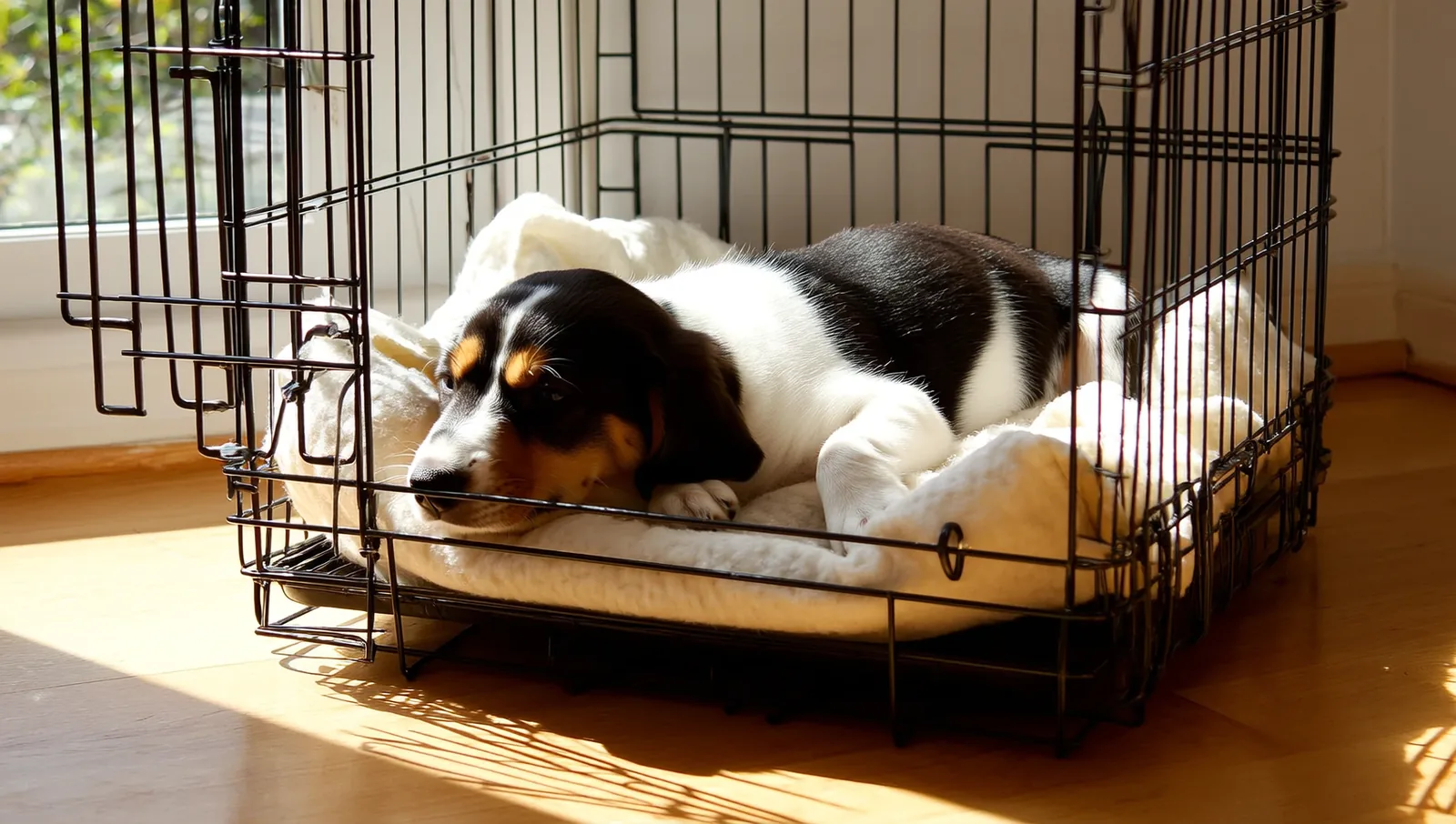
Set up management before the puppy walks in. Baby gates, an exercise pen, and a crate are not punishments, they are the architecture of a safe household. They let you separate puppy and kids the moment you cannot actively watch both, which, with young children, is often. The rule that prevents the most trouble is simple: a puppy and a small child are never together unsupervised, not for a minute, not “just while I grab the door.” Active supervision means you are watching the interaction, not the television while they share a rug.
This is also the window that shapes the dog your puppy becomes. The critical socialization period that runs from roughly three to sixteen weeks is when gentle, positive experiences with children teach a puppy that kids are predictable and good. If you want a concrete schedule for what to expose your puppy to and when, our week-by-week milestone guide maps it out. Calm, short, rewarding encounters beat long chaotic ones every time.
What Each Age Can, and Cannot, Do
Matching the job to the child keeps everyone safe and gives kids a real role.
Toddlers under three cannot be responsible for any part of puppy care and cannot reliably control their hands or their volume. Their job is to be calm and close, on a parent’s lap, dropping a treat on the floor. No carrying, no hugging, no following the puppy around.
Young children from four to six can help fill a water bowl, toss a toy, and practice a sit cue while an adult holds the treats and the leash. Teach them to be a “tree” (stand still, hands folded, look away) if the puppy gets nippy or jumpy. Standing still works far better than running and shrieking, which only turns a child into the most exciting toy in the room.
Older children from seven to twelve can take on supervised walking, feeding, and simple training games, and they often make excellent trainers because they follow a clear cue, mark, and reward sequence precisely. Teens can handle most tasks and can even attend class as the puppy’s handler if they are committed to it.
Across every age, the same handling rules hold. No hugging or face-to-face kissing, no climbing or riding, no pulling ears or tails, no chasing, and no bothering the puppy while it eats, chews, or sleeps. These rules are not arbitrary. They remove the exact situations that make a puppy feel trapped.
The Signals Every Family Member Must Learn to Read
A dog almost never bites without warning. It warns in a quiet, escalating sequence that most people simply have not been taught to see. Teach it to the whole family, kids included, because a child who can read a puppy is a child who knows when to back off.
The early, easy-to-miss signals say “I am uncomfortable”: lip licking when there is no food, a big yawn when the puppy is not tired, turning the head or whole body away, and a sudden scratch or sniff. Next comes “I really need space”: a tucked tail, a lowered body, whale eye (the half-moon of white showing at the corner of the eye), and freezing, going still and stiff in the middle of motion. A growl sits near the top of this ladder, and it is the most misunderstood signal of all. A growl is information, not disobedience. Never punish it. A puppy scolded for growling learns to skip the warning and go straight to the snap, which is exactly how you manufacture the “bite with no warning” that makes the news. Reading another dog’s signals is a related skill worth building too, and our field guide to canine body language covers it in depth.
The single most powerful rule you can give a child is this: when the puppy walks away, the game is over. Following a dog that has chosen to leave is how comfortable turns into cornered.
Build In Consent, Protect the Off Switches
Teach kids a consent test they can run themselves. Pet the puppy gently for three seconds on the chest or shoulder, then stop and take your hands away. If the puppy leans in, nudges, or stays for more, it is enjoying the contact. If it moves off, looks away, or freezes, it is finished, and that choice gets respected. This one habit prevents most of the “but he was fine a second ago” incidents.
Then protect the puppy’s off switches, the places and moments where it gets to be completely left alone. The crate and the bed are no-kid zones, full stop. Nobody reaches into them, climbs in, or wakes a sleeping puppy. Food bowls, chews, and favorite toys stay hands-off while the puppy has them, which is how you keep resource guarding from ever taking root rather than trying to fix it later. A puppy that learns small humans walking past its bowl predict good things, because a parent occasionally drops a treat in passing, has no reason to guard it.
Bringing Kids Into Puppy Class the Right Way
A good puppy class is one of the best investments a family can make, and many classes welcome children, though some set a minimum age and most ask that one adult be the primary handler. The goal is for kids to take part without overwhelming the puppy or the room.
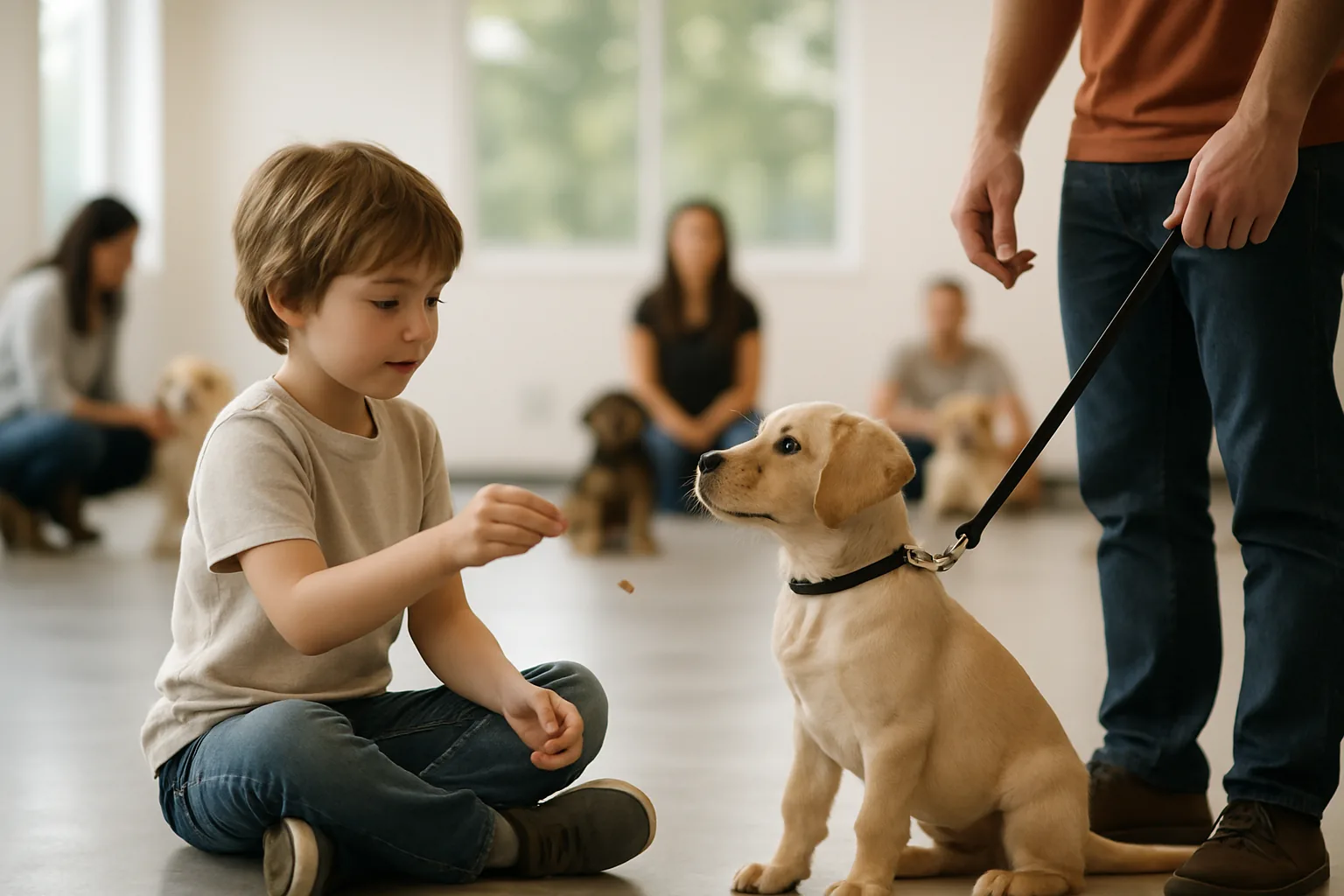
Give each child a small, specific job: the designated treat-thrower, the person who clicks the clicker, the one who calls the puppy’s name in the recall game. Keep them seated and calm during settle exercises. A child who attends class learns the same cues and rewards the adults are using, which means the training carries on consistently at home instead of unraveling the moment school lets out. When you are choosing where to enroll, look for a force-free, well-run class and ask the trainer directly how they include children. The good ones have a clear answer ready.
Keep puppy class, which is about socialization and life skills, separate in your mind from formal obedience and from behavior modification. A family with young kids needs that first category most of all.
When to Bring In a Professional
Most puppies, raised with calm management and consistent rules, settle into family life beautifully. Some need more help, and asking for it early is a sign of good ownership, not failure.
Call a professional if your puppy stiffens, guards food or objects, snaps, or shows real fear (cowering, hiding, refusing to eat) around your children. Do not wait to see whether it passes. Because dog training is unregulated in most states, verify credentials: look for a trainer certified through CCPDT, KPA, or IAABC who works with evidence-based, force-free methods and no aversive tools. For genuine fear or any aggression, the right professional is a board-certified veterinary behaviorist, who can rule out pain and build a behavior plan around your specific household.
A puppy and a child can grow up as the best of friends, and the research says that friendship is genuinely good for the kid. Your job is to be the calm, consistent referee who keeps it safe while it forms.
Further reading (sources)
- Archivos Argentinos de Pediatría on the consensus around the benefits and risks of children and pets
- American Veterinary Medical Association on preventing bites in households with young children
- American Veterinary Medical Association with why children are bitten most and how to prevent it
- The Blue Dog for how toddlers and young children should interact with the family dog
- American Veterinary Society of Animal Behavior and why early, well-managed socialization is worth the effort