Do Puppy Classes Actually Prevent Behavior Problems? What the Follow-Up Research Shows
Published on October 8, 2026

Somewhere near the sign-up button, puppy class websites often make the same promise: enroll now and you will prevent behavior problems later. There is research behind the claim. In a 2024 Psychology Today column, the psychologist Stanley Coren reported that puppies trained before six months of age showed a 29 percent reduction in the likelihood of aggression as adults, with similar figures for destructive behavior (40 percent), compulsive behavior (36 percent) and excessive barking (32 percent). Puppies, he concluded, can “benefit a great deal.”
Those figures come from a real study, and the direction they point is probably right. But if you are weighing the class fee, or you are a trainer who wants a citation that survives a client actually reading the paper, the details matter more than the headline. Here is what the follow-up studies measured, what their numbers mean in plain language, and what none of them can promise.
The Study Behind the 29 Percent
The numbers come from a 2021 paper by Ian Dinwoodie, Vivian Zottola and Nicholas Dodman of Tufts University’s Cummings School of Veterinary Medicine and the Center for Canine Behavior Studies. It was an online survey, shared on social media and with the center’s members in the autumn of 2019, in which 641 owners described 1,023 dogs aged one or older. Of those, 494 had attended puppy training at six months or younger; the other 529 had not, and became the comparison group.
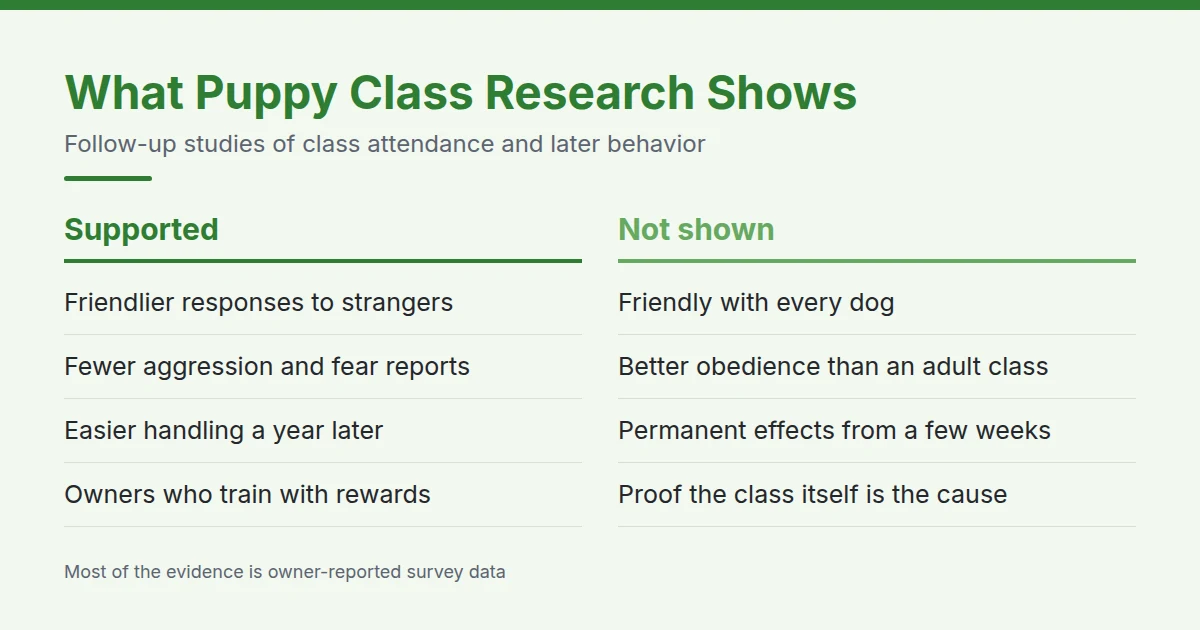
After adjusting for sex, neuter status, current age and whether the dog came home by 12 weeks, dogs who went to class had 0.71 times the odds of aggression, 0.64 times the odds of compulsive behavior, 0.60 times the odds of destructive behavior and 0.68 times the odds of excessive barking. Fear and anxiety, jumping up, escaping and hyperactivity showed no significant difference.
Two findings from the same paper get quoted far less. Starting class at three months or younger was no better than starting at four months or at five to six, and the number of classes attended made no measurable difference. What did matter, among the dogs who attended, was method: puppies trained with rewards alone had 0.52 times the odds of aggression of those trained with punishment or a mix of the two. The authors suggested the benefit may come from owners continuing to practice what they were taught.
Odds Are Not Dogs
The column turned 0.71 into “a 29 percent reduction in the likelihood” of aggression. It is a 29 percent reduction in the odds, and when a behavior is common, odds and likelihood drift a long way apart.
Aggression was very common in this survey because of how it was asked. Owners ticked anyone or anything their dog had ever acted aggressively toward, and the most frequent answer was an unfamiliar dog away from home. More than half of all the dogs qualified. In the study’s public data, about 61 of every 100 dogs who skipped class had a history of aggression. Odds 0.71 times as high work out to about 53 in 100. That is roughly eight fewer dogs per hundred: real, worth having, and a long way from 29. Destructive behavior, which was rarer, moves from about 17 dogs in 100 to about 11.
The column also left out one result: class dogs had 1.56 times the odds of house soiling, an odd thing for a class to cause. The authors’ published analysis code explains it. Every other problem counts when the owner described it, but house soiling counts when the owner left those questions blank, so the paper’s house-soiling count (798 dogs, or 78 percent) is exactly the number with no soiling reported. Counted the right way round, 16 percent of class dogs in the raw data had a house-soiling history, against 27 percent of the others: one more point for the class, and a good reason to read the tables, not just the summary.
The Owners Who Enroll Are Not the Owners Who Don’t
Every study in this area runs into the same wall. Nobody assigns puppies to class at random. Owners choose, and the owners who choose class differ from the ones who do not in ways that also shape how a dog turns out.
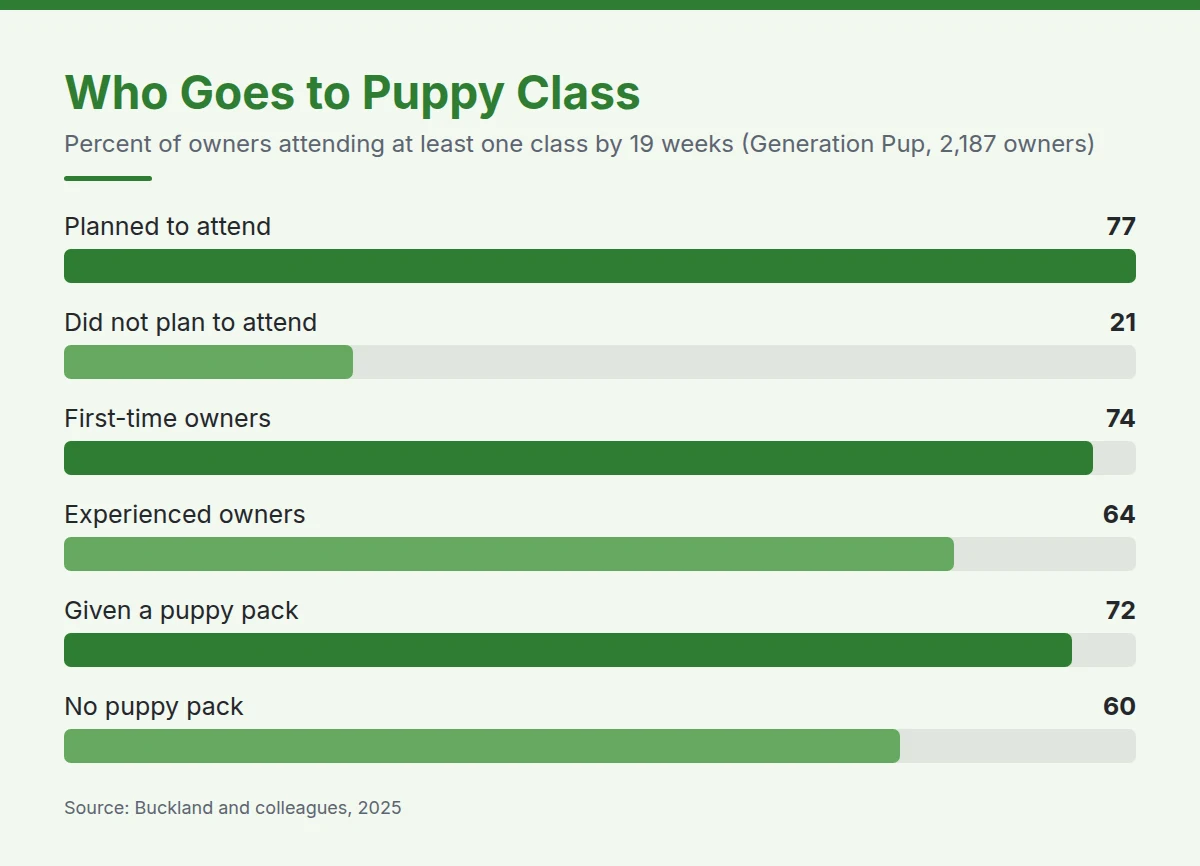
The clearest picture comes from Dogs Trust’s Generation Pup cohort in the UK and Ireland. Among 2,187 owners of puppies under 19 weeks, two thirds went to at least one class. Attendance rose with household income, was higher among first-time owners (74 percent, against 64 percent of experienced owners) and among owners handed a puppy information pack (72 percent, against 60 percent), and fell the older the puppy was when it came home. The strongest predictor was plain intention: 77 percent of owners who had planned to attend did so, against 21 percent of those who had not.
The Tufts data show the same tilt. Of the class dogs, 83 percent had come home by 12 weeks, against only 28 percent of the comparison dogs. The survey did not record how much later the rest arrived, but any dog adopted after six months could never have been in the class group at all. The comparison dogs were also older (7.8 years on average, against 6.4), with more years in which to growl at something. The analysis adjusted for age and the 12-week line, but not for the owner: as the authors note, owner and household details were not collected, and neither were breed or where each dog came from.
An older University of Minnesota study shows why that matters. Among 248 dogs adopted as puppies from a humane society, those who had attended its puppy classes were more likely to still be in their homes as adults. So were dogs who had been handled often as puppies, and dogs who slept on or near the owner’s bed. Nobody thinks the bed keeps dogs in homes. Both are signs of an engaged owner, and so is enrolling in class.
Even the outcome depends on the owner. In Generation Pup’s nine-month data, owners who had neither attended nor planned to attend puppy class were more likely to report a problem behavior. But owners who had skipped class were also more likely to watch their dog pull on the lead, jump up at people or ignore a recall and not call it a problem at all. Almost every outcome in this research is an owner’s report, and classes change owners as much as dogs.
When the Arrow Points Backward
Two results from overlapping research teams point in opposite directions. In a general sample of UK dog owners, Casey and colleagues found puppy class attendance linked to a lower risk of aggression toward unfamiliar people, both visitors and strangers outside the house. When Lord, Casey, Loftus and Blackwell looked at dogs referred to a specialist behavior clinic, the sign flipped: dogs who had attended more than five puppy classes were 1.7 times as likely to be aggressive toward people as dogs who had never attended.
Nobody sensible concludes that a sixth class makes dogs bite. The likelier story runs the other way: owners whose puppy is already worrying them keep going back for help. The clinic study’s authors noted that their factors explained only 7 to 10 percent of the variation between the two groups and called for longitudinal studies to establish which came first. The Royal Veterinary College’s Pandemic Puppies team read a similar link, between adult classes and owners finding their dog harder than expected, as “likely due to reverse causality.” A survey taken at one moment cannot tell you which way the arrow runs.
What the Research Supports
With all of that in mind, a handful of findings keep turning up across different countries, designs and research teams.
- Friendlier responses to strangers. In Japan, Kutsumi and colleagues visited 142 dogs at home with a woman none of them had met. Dogs who had done a six-week puppy class responded to her more positively than dogs from adult classes or no class. Casey’s UK survey points the same way for aggression toward unfamiliar people.
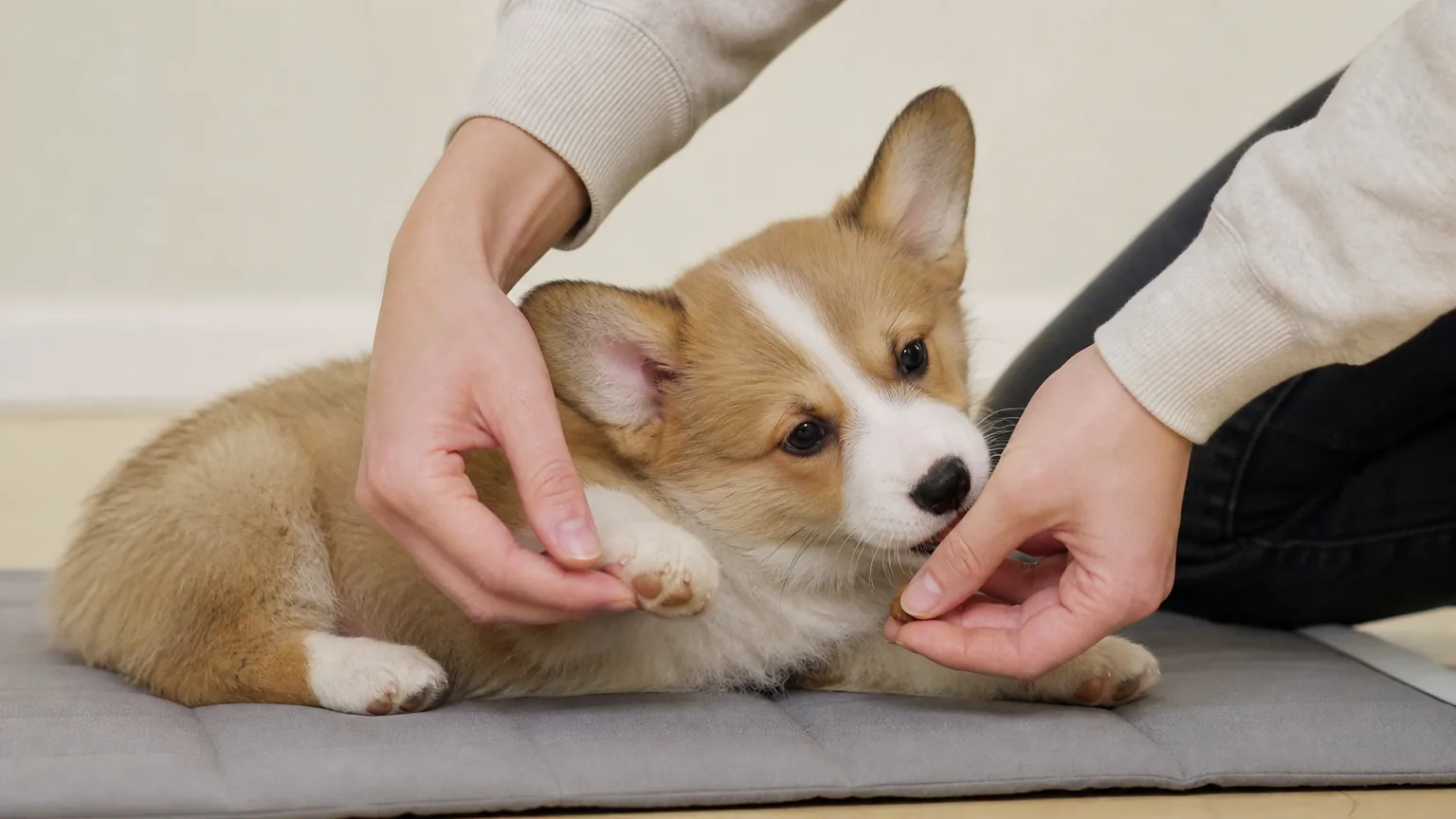
- Fewer reports of aggression and fear, and easier handling. Beyond the Tufts odds ratios, a small Spanish study by González-Martínez and colleagues scored 80 dogs a year after class and found better results among class dogs for trainability, nonsocial fear, one of the aggression scales and touch sensitivity, which is the closest this research comes to measuring the paw, ear and mouth handling good classes practice. In a survey of 296 puppy owners in Canada and the US, Cutler, Coe and Niel found that attendees’ puppies were less likely to be frightened by thunder, vacuum cleaners or crates.
- Owners who reach for rewards. Cutler’s class attendees used punishment-based discipline less often and exposed their puppies to more people, dogs and noises. Among the UK’s Pandemic Puppies, attending an online puppy class was the only factor linked to lower odds of owners using any aversive method, which the researchers took as a sign that the benefit works through educating the owner rather than training the dog directly.
What It Cannot Promise
The limits matter as much as the findings, because they are where most of the overselling happens.
- Better obedience than a later class would give you. In Kutsumi’s study, puppy class and adult class both improved response to commands compared with a one-off puppy party or no class, and the puppy class did no better than the adult one. On the 15 everyday behavior scales owners filled in (the C-BARQ, which covers aggression, fear, separation problems and more), the four groups showed no significant differences. Nothing in this research measures the kind of reliability an obedience title demands.
- A dog who gets on with every dog. Even in the Tufts class group, about one dog in four had at some point acted aggressively toward an unfamiliar dog away from home, against 38 percent of the comparison dogs. Better odds, not a guarantee. Generation Pup also found classes varied in the number, ages and sizes of the puppies they mixed, and putting a 40-pound puppy with a 4-pound one without a plan can teach exactly the wrong lesson.
- A permanent effect from a few weeks. One of the best-controlled experiments in this area is not a class study. Stolzlechner, Bonorand and Riemer split 12 litters in half: from three to six weeks of age, one half got graded noises, novel objects and puzzles, while their littermates got the same time being cuddled or played with. At six to seven weeks the treated puppies were bolder and recovered faster from a loud noise. At six months a personality questionnaire found no lasting difference, and the authors suspected the exposure needs to continue. A class starts socialization; it does not vaccinate against problems.
- Proof that the earliest start is best. The Tufts data found no extra benefit for starting at three months or younger. That does not make the socialization window a myth, since that evidence comes from research on early experience rather than enrollment dates, and a well-run class is one of the few places a puppy meets dozens of people and dogs safely while the window is open (see our guide to socialization and confidence building). It does mean this survey cannot be quoted for “the earlier the better.”
- Certainty. Controlled experiments on puppy classes are rare, so most of this evidence is survey data. A 2015 review by Howell, King and Bennett concluded that the studies “do not provide strong evidence for the benefit, or lack thereof, of puppy classes on adult dog behavior.”
So Is the Class Worth the Fee?
Yes, if you buy it for the right reasons. Across North America, the UK, Spain and Japan, the associations mostly point one way: friendlier with strangers, fewer aggression and fear reports, easier handling, owners more likely to train with rewards. The effects are modest and some of the credit belongs to the kind of owner who signs up, but a consistent modest benefit is a reasonable return on six evenings (our pricing and value guide covers what those evenings cost).
The research is clearest on one point: the class itself matters. Reward-based training went with lower odds of aggression in the Tufts data, and among the Pandemic Puppies it was online classes that were linked to owners steering clear of aversive methods. So put your effort into choosing the right puppy class, be wary of trainers who sell a “balanced” middle ground, and keep practicing after graduation, because the six weeks are where the habits start, not where they finish.
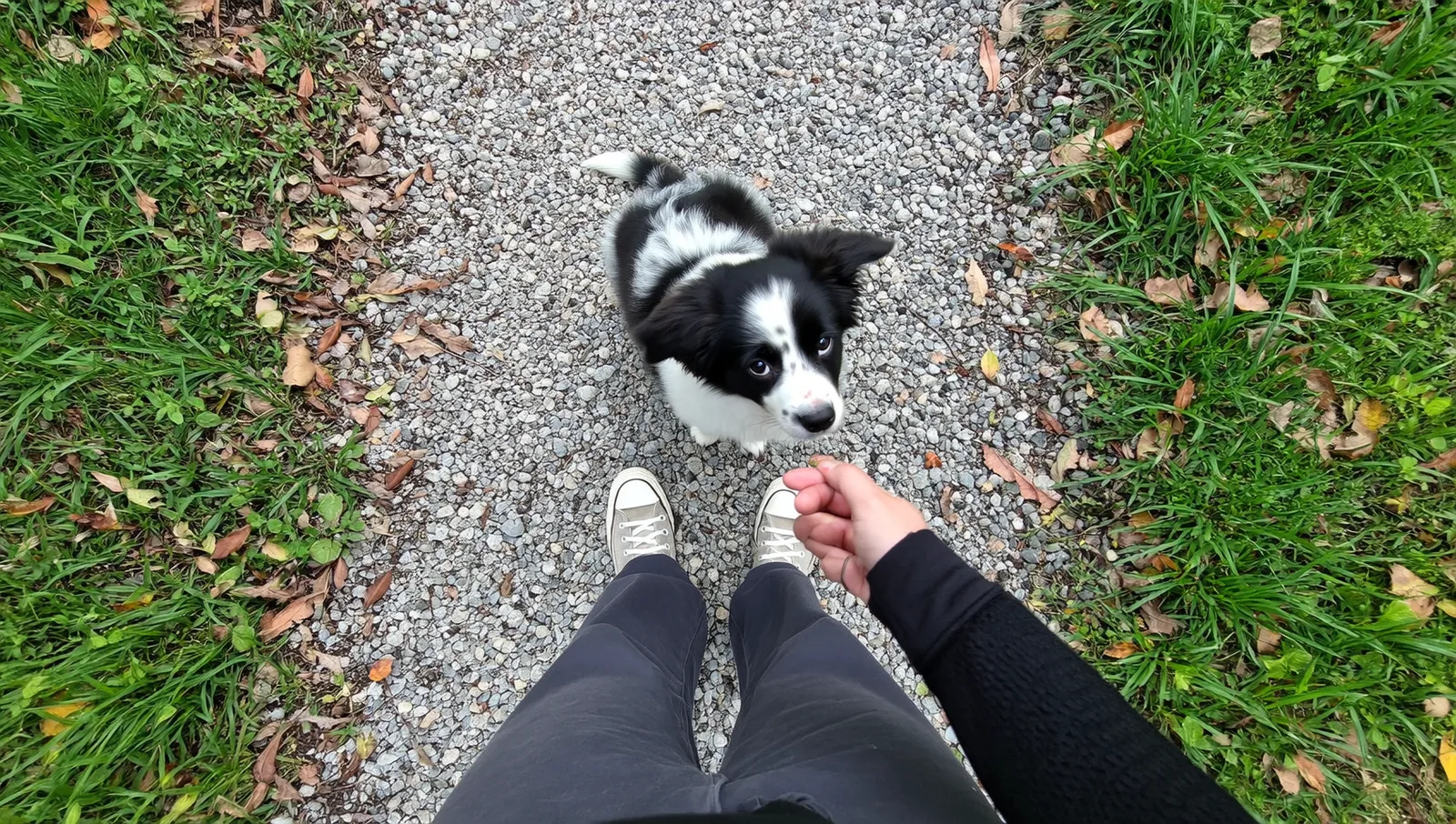
If your puppy is already frightened or aggressive, a group class is not the right tool on its own. Ask your vet about a referral to a veterinary behaviorist before the problem has years to settle in.
For Trainers: A Citation That Holds Up
One sentence a skeptical client can check: in surveys from several countries, puppies who went to class were less often reported as aggressive or fearful later on, though no study has yet shown that the class itself is the cause. Quote the Tufts figures as odds, not as percentages of dogs, use Casey’s survey and Kutsumi’s home tests for the stranger findings, and reach for Buckland’s Generation Pup paper when someone asks who enrolls. Then retire the words “prevents” and “guarantees.”
The Bottom Line
Puppy class has the better side of the evidence, and nothing here is a reason to skip it. What the research supports is a modest, probable benefit that runs largely through what the owner learns, not a guarantee stamped on the puppy at eight weeks. The 29 percent is closer to eight dogs in a hundred, the comparison groups were never equal, and the strongest results show up when the class teaches rewards and the owner keeps going. Enroll for that, and judge the class by whether it delivers it.
Further reading (sources)
- Stanley Coren in Psychology Today on the column that turned the Tufts odds into headline percentages
- Dinwoodie, Zottola and Dodman for the 1,023-dog survey of training before six months
- The study’s public analysis code with the line that codes house soiling the other way round
- Buckland and colleagues on who attends puppy class in the Generation Pup cohort
- Lord, Casey, Kinsman and colleagues for what owners call a problem at six and nine months
- Duxbury and colleagues on puppy classes and staying in the adoptive home
- Casey and colleagues with risk factors for aggression toward family and unfamiliar people
- Lord, Casey, Loftus and Blackwell for the referral-clinic result that runs the other way
- Brand and colleagues on problem behaviors and training methods in Pandemic Puppies at 21 months
- Kutsumi and colleagues for puppy class, puppy party, adult class and no class compared
- González-Martínez and colleagues on C-BARQ scores a year after puppy class
- Cutler, Coe and Niel with the socialization habits of class attendees and non-attendees
- Stolzlechner, Bonorand and Riemer on a split-litter socialization trial and its six-month follow-up
- Howell, King and Bennett for a review of puppy parties, classes and adult behavior