How Puppies Read Other Dogs: A Body-Language Field Guide for Class and the Dog Park
Published on June 2, 2026
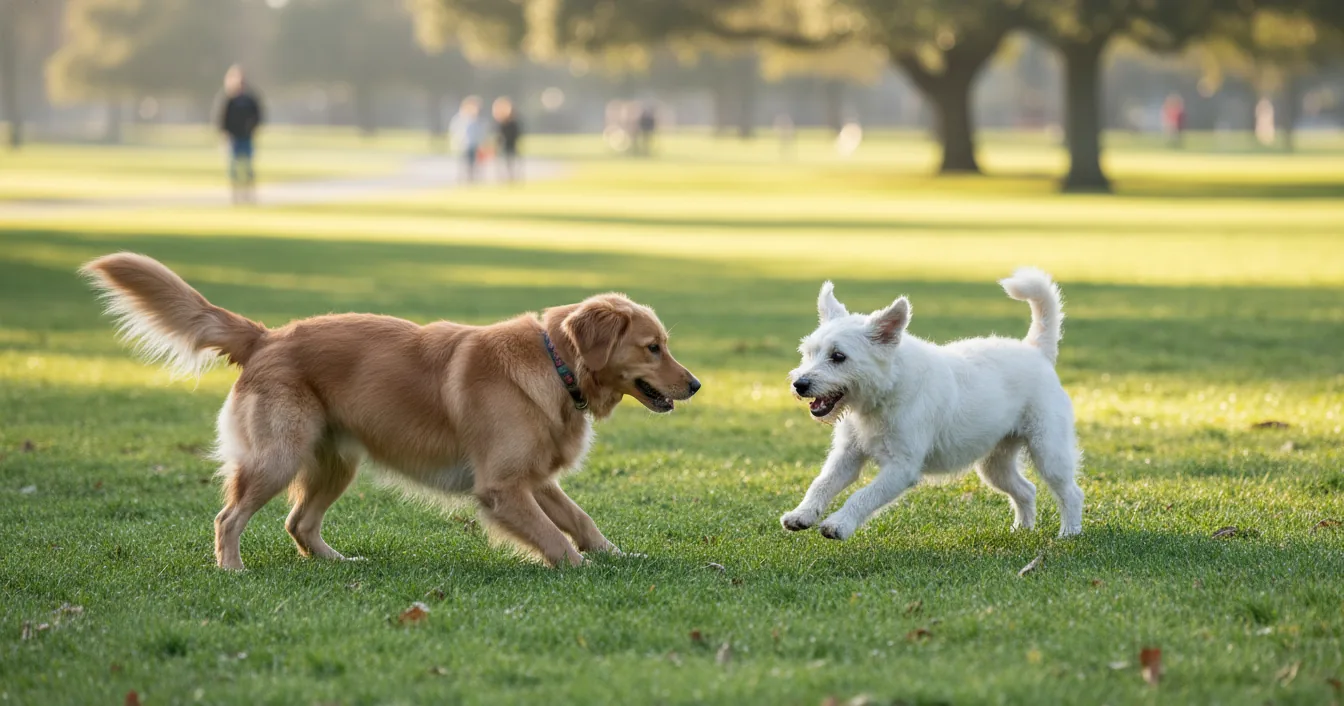
When You Cannot Tell Play From a Fight Starting
Your puppy graduated class knowing how to sit, settle, and take a treat in a busy room. None of that tells you whether the strange dog trotting up at the park is about to have a lovely time or start a fight in slow motion. Two dogs meeting is not a quick sniff and a wag. It is a fast, layered conversation happening across several channels at once, and your job, until your puppy becomes fluent, is to translate it.
Most owners watch the wrong thing (the tail) and miss the real ones (the face, the spine, the pauses). This guide is about reading the other dog, the one you did not raise and cannot vouch for, so you know when to let play run and when to step in.
Dogs Talk on Four Channels at Once
A confident, comfortable dog moves in a loose, fluid way, its weight spread evenly over all four feet. A dog that shifts its weight forward and stands tall, trying to look bigger, is aroused or asserting itself. A dog that lowers its body, leans back, or rolls onto its side is saying the opposite: I am no threat. Those three postures are the headline, and you can read them from across a field.
Underneath posture, dogs are also signaling with their faces, their voices, and their noses. Scent does a lot of the work (the nose-to-rear greeting every owner finds embarrassing is two dogs reading each other’s sex, health, and recent history in a couple of seconds), but scent is the one channel you cannot see. So you watch the visible three: body, face, and voice. When all three agree, the picture is reliable. When they contradict each other, a fast-wagging tail above a stiff, frozen body, for instance, trust the stiff body.
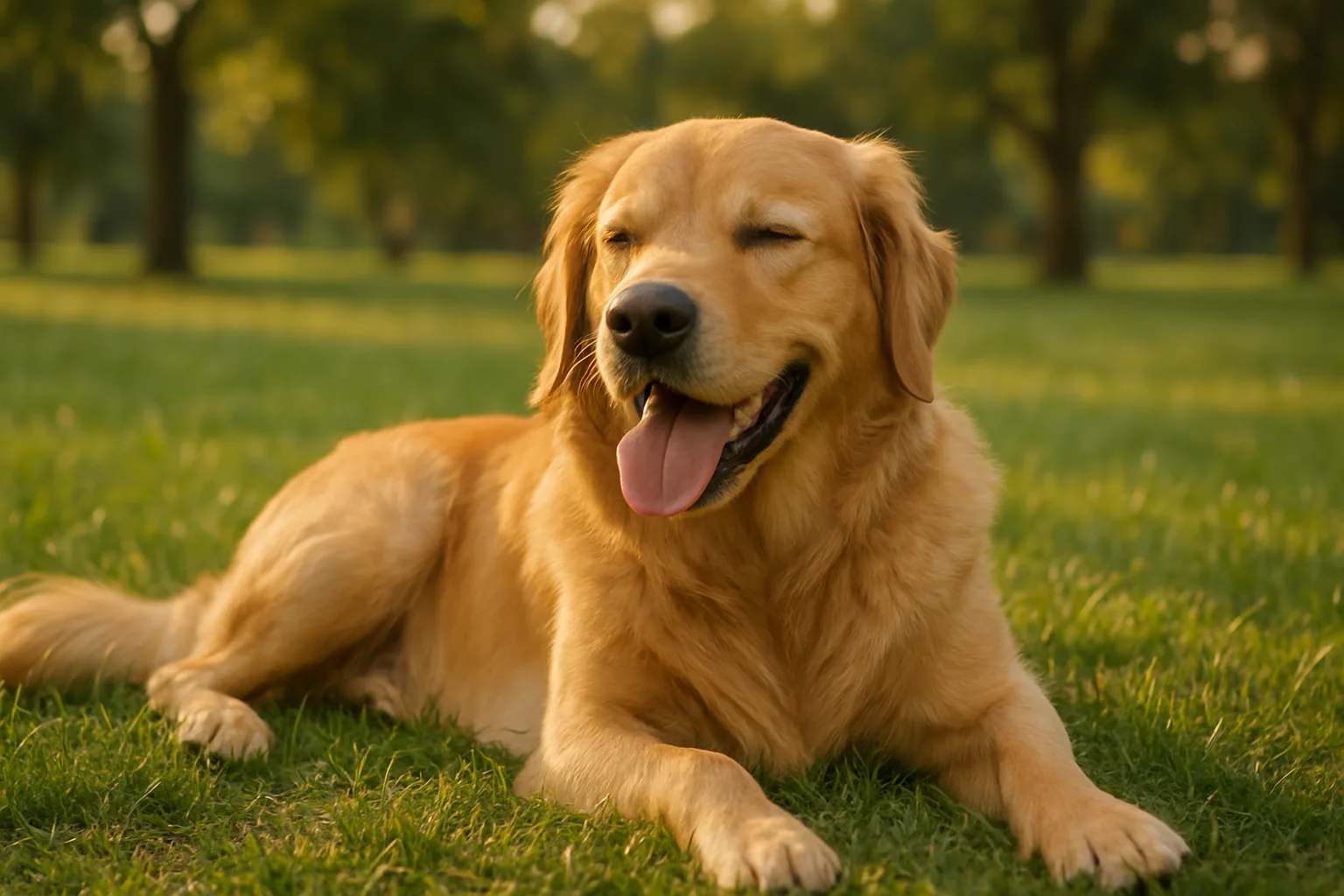
What a Real Play Bow Looks Like
The play bow (front end down, rear end up, usually with a springy little bounce into it) is the closest thing dogs have to a universal word. It means “this is play, none of what follows is serious.” The bow does double duty: it is both the opening invitation and the reset button a dog hits mid-game to say “still just playing” when the wrestling heats up. Healthy play is full of them, and full of other tells that the dogs are negotiating fairly. They swap who chases and who gets chased, the bigger dog flops down to handicap itself, and the action keeps pausing and restarting. Loose, bouncy, curvy, and interruptible is the signature of good play.
What is not a play bow is a low, still crouch with a hard stare locked on the other dog. That is a stalk, and the tell is stiffness where a real bow is springy. So if you see plenty of bows and frequent role-swaps, relax. If one dog stops bowing and only chases, pay attention.
Why a Wagging Tail Is Not Consent
The single most expensive myth in dog-to-dog interaction is that a wagging tail means a friendly dog. A tail held high and wagging fast signals arousal and confidence, which is not the same as friendly and is sometimes the opposite. A tail clamped low or tucked is fear. The wag you actually want is the loose, mid-height, loping sweep that takes the whole rear end with it.
It gets more specific than that. Researchers have found that dogs wag with a rightward bias when they feel something positive and a leftward bias when they feel something negative, and that other dogs can read the difference. You are not going to clock which way a tail leans across a busy park, and you do not need to. The practical lesson is simpler: a tail is one word in a sentence, not the whole sentence. Read it together with the spine, the ears, and the face, and never treat a wag on its own as a green light.
Calming Signals: A Dog’s Polite Request for Space
Norwegian trainer Turid Rugaas catalogued a set of behaviors she named calming signals: yawning out of context, licking the lips, turning the head or the whole body away, blinking slowly, sniffing the ground for no obvious reason, and curving in an arc rather than marching straight at another dog. These are not random twitches. They are a dog saying, politely, “I mean no harm” or “I need this to slow down.”
Here is the part owners miss. Calming signals only work if the other dog, or the other owner, honors them. When a dog yawns, looks away, licks its lips, and then tries to leave, and the interaction keeps getting pushed anyway, that dog has run out of polite options. What comes next is louder: a growl, a snap, a bite. The warning was there the whole time. It just was not seen. If you spot your puppy throwing calming signals at a pushy dog, that is your cue to make space, not to let them work it out.
When Stillness Means Trouble
New owners brace for noise. Real trouble is usually quiet. The most useful thing you will ever learn to spot is the freeze: a dog that goes suddenly still and stiff, weight loaded, breath held, eyes locked on. Stillness in the middle of motion is an alarm, not a lull.
Pair it with the face. Soft, slightly squinting eyes belong to a relaxed dog. A hard stare with the whites showing at the corners (trainers call it whale eye) is a warning, one of the clearest a dog gives. A loose, open mouth with a lolling tongue is calm; a mouth that snaps shut and tight is a dog that has stopped having fun and started assessing. When a frozen body, a hard stare, and a closed mouth show up together, do not wait to see what happens. That stack of signals is the moment before, and the kind thing is to interrupt it.
One caution while you do: if a dog growls, do not punish it. A growl is information, the dog telling you it needs room, and a dog punished for growling often learns to skip the warning and go straight to the bite. A dog that struggles to read or send any of these signals, often one that missed early socialization or arrives already fearful, needs a gentler, more managed introduction than a busy park can offer. The same threshold-based approach used with fearful puppies applies here.
The Two-Second Rule for Unbalanced Play
Good play is balanced. The dogs trade roles, take turns, and pause. Unbalanced play is one dog always on top, always chasing, always pinning, while the other only ever flees, hides behind a human, or stops offering play bows. It can look energetic and “fine” right up until it is not.
The cleanest check is the two-second rule, sometimes called a consent test. Briefly interrupt the play: call both dogs apart, or gently take the more boisterous dog by the collar and hold it for about two seconds. Then let go and watch the other dog. If it bounds straight back in for more, you have mutual play, so carry on. If it shakes off, moves away, sniffs the ground, or ducks behind your legs, it was not consenting, it was coping, and play is over for now. Running this little test every minute or two is the single most useful habit at a dog park. It also depends on your puppy actually coming when you call it away from something fun, which is exactly why a strong, well-paid recall is worth building before the park, not after.
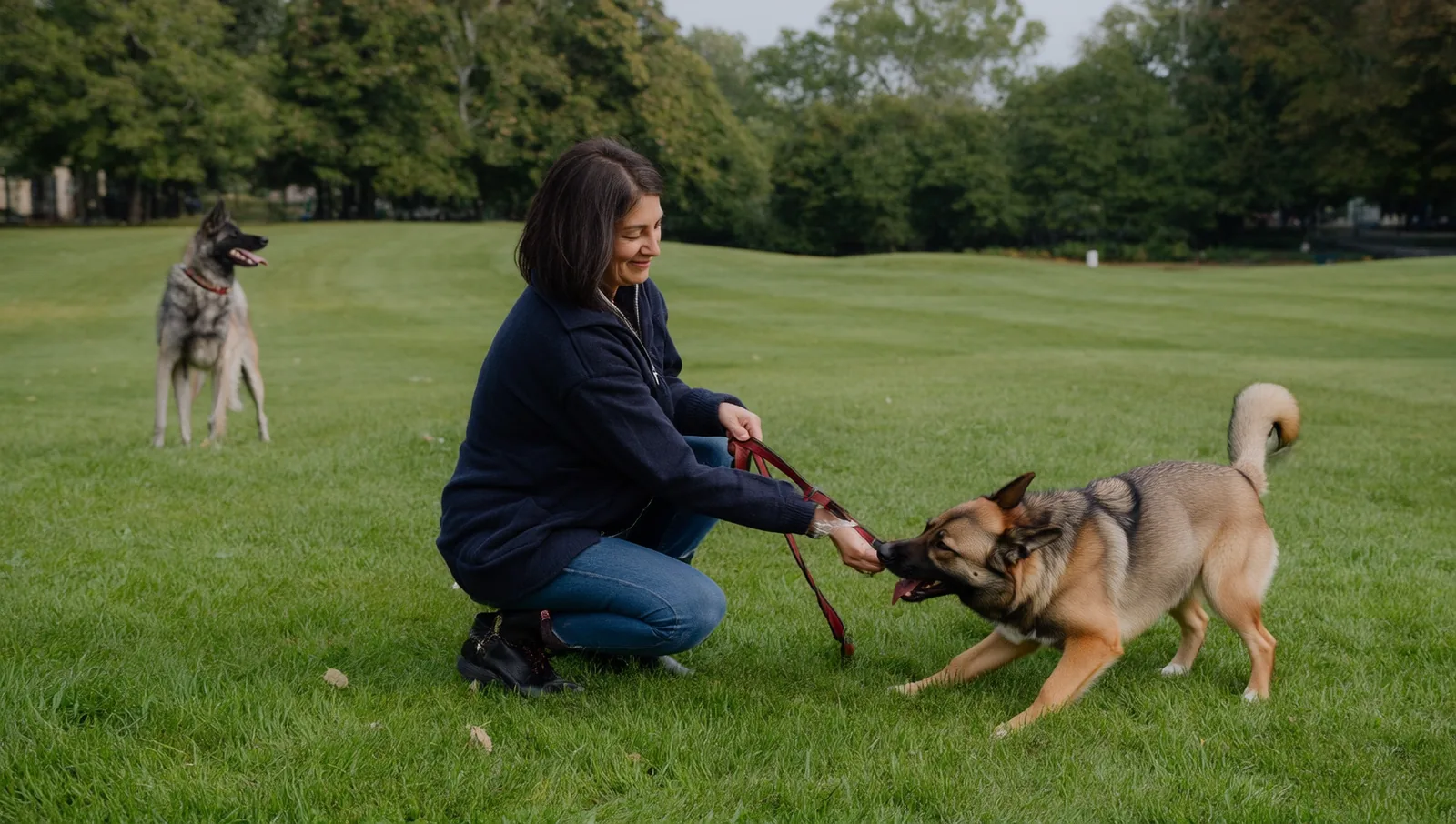
Short, Well-Matched, and Over Before It Sours
The best dog-park sessions are the boring ones: two well-matched dogs, a few minutes of balanced play, ended by you while everyone is still happy. A handful of good interactions builds more social confidence than an hour of chaos with a dozen mismatched strangers. Quality beats quantity every time, and “ended early on a good note” beats “ran until it fell apart.”
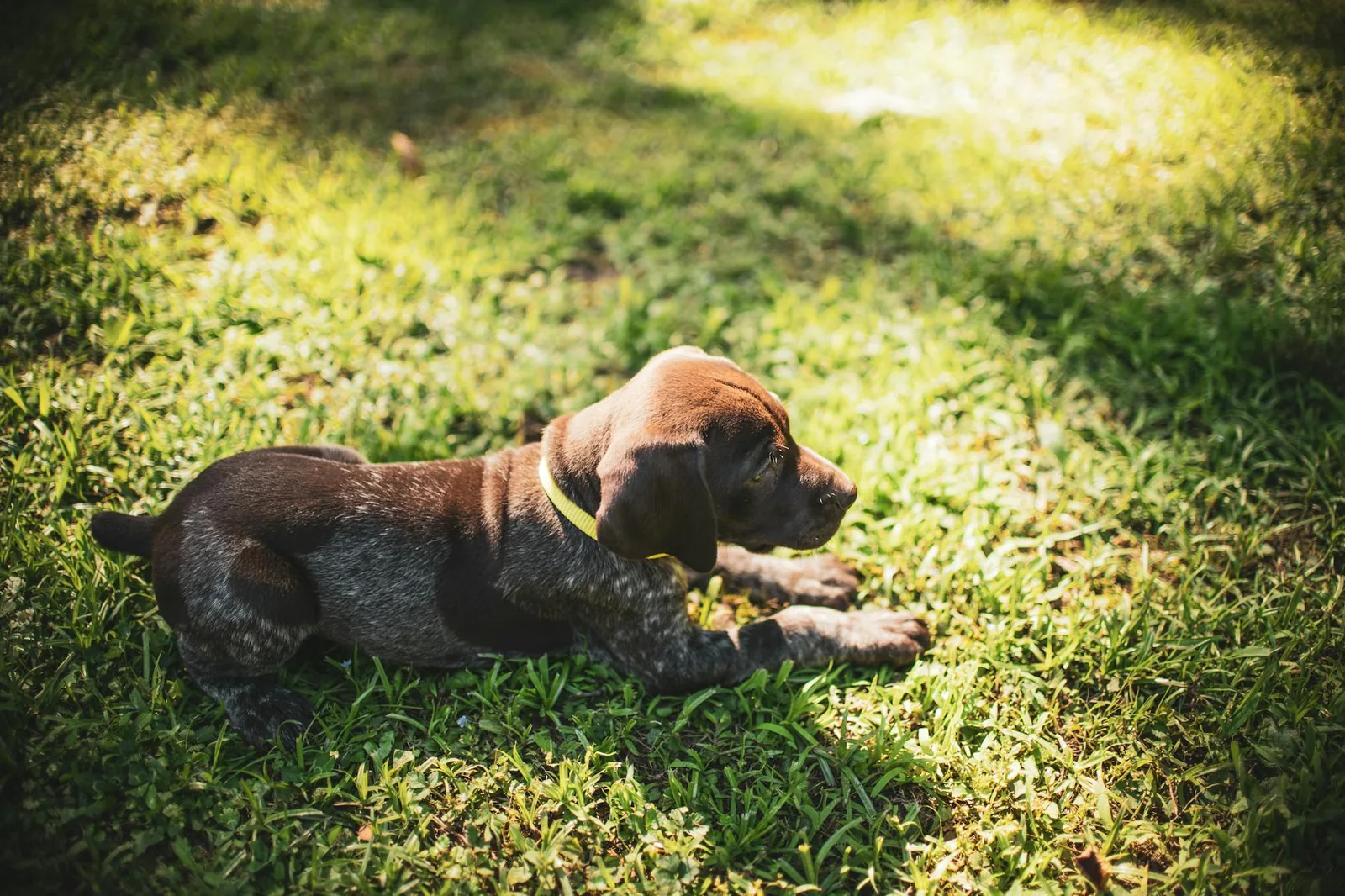
This is also why the early socialization window matters so much: puppies learn to read and send these signals by practicing them with appropriate dogs, and a good puppy class is a far safer classroom for that than an open park. If your puppy consistently misreads other dogs, or other dogs keep misreading your puppy, raise it with a qualified trainer or your vet rather than hoping it sorts itself out. And when you are sizing up a class or a trainer, ask how they run and supervise off-leash play. The good ones referee it exactly like this.
Further reading (sources)
- Whole Dog Journal on how dogs communicate across body, face, voice, and scent
- Turid Rugaas for the original catalogue of canine calming signals
- Current Biology with the research on asymmetric tail wagging and emotion
- American Veterinary Society of Animal Behavior on why early, well-managed socialization matters
- Fear Free Pets for spotting stress signals before they escalate