Bribe or Reward? Fading the Food Lure So Your Puppy Listens With Nothing in Your Hand
Published on August 9, 2026
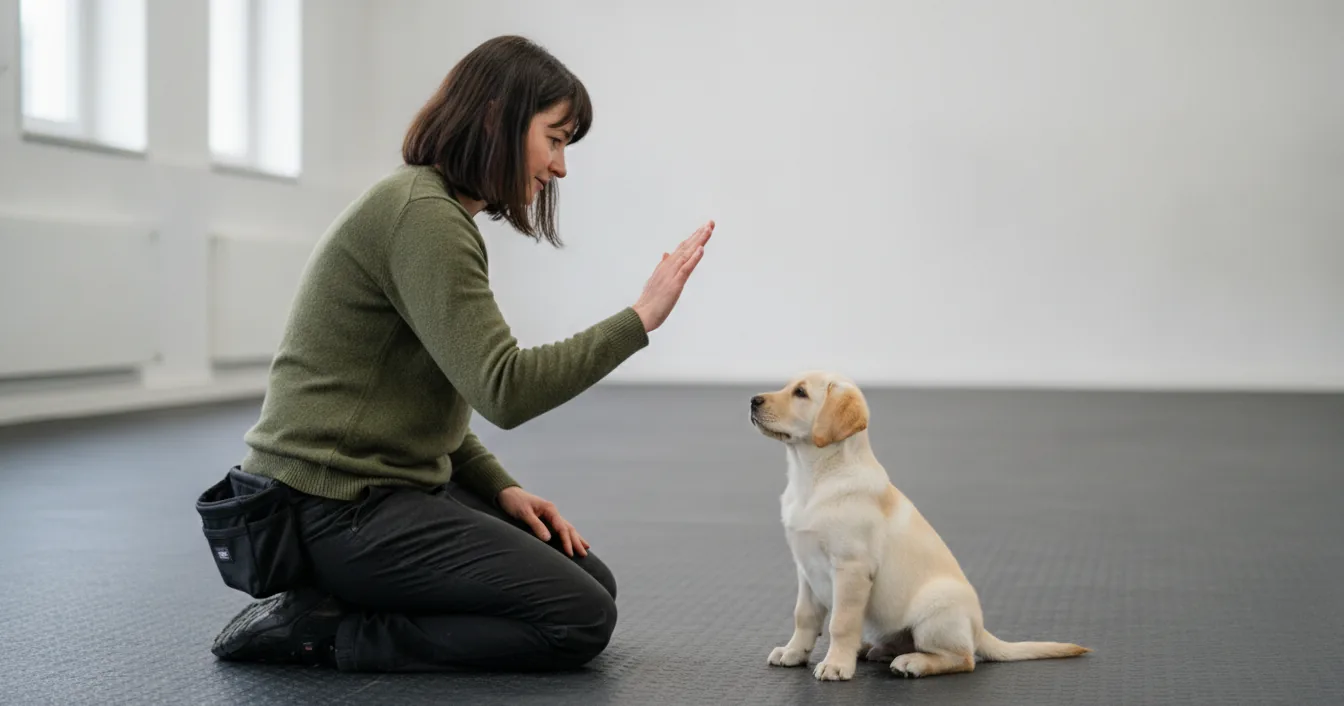
There is a moment in most group classes, usually around week three, when the instructor stops the room and says some version of “get the treat out of your hand.” Half the owners look quietly betrayed. The treat in the hand is the thing that has been working. It is why the sit happens, why the down finally clicked last Tuesday. Giving it up feels like training with the brakes on.
The American Kennel Club ran a piece earlier this month on the other end of that story: the dog who listens beautifully in the kitchen and goes conveniently deaf on the pavement because the treat bag stayed home. It is the most common complaint trainers field from graduates of their own classes, and the diagnosis owners reach for is almost always wrong.
Your puppy is not spoiled, stubborn, or holding out for a better offer. Your puppy has learned, with perfect accuracy, exactly what you taught: that visible food is part of the instruction.
The Distinction Almost Everyone Gets Backwards
A bribe and a reward can be the identical piece of chicken, cut the same size, delivered by the same hand. What separates them is when the puppy sees it.
Trainers split the world in two. Antecedents happen before a behavior and tell the dog what to do: your verbal cue, your posture, where you are standing, the room you are in. Consequences happen after and tell the dog whether to bother again. Food shown before the behavior is an antecedent, so it has joined the instruction. Food delivered after is a consequence, and only then is it working as a reinforcer.
So “my puppy only listens when I have a treat” is not a motivation problem at all. It is an antecedent problem. The puppy is doing precisely what a good learner does: responding to the cue as it was actually presented, which happened to include a visible sausage.
That matters because the two have opposite fixes. A motivation problem sends you shopping for better food, and plenty of owners spend real money going down that road. An antecedent problem is solved by changing what your puppy sees before it acts, which is free and takes about two sessions.
Your Puppy Built a Compound Cue
Dogs are exceptional at noticing what predicts what, and they do not know which parts of a picture you consider relevant. When you say “sit” while holding a treat between finger and thumb at nose height, the puppy does not file that as one cue with some incidental scenery. It files the whole package.
Remove one element from a compound cue and the response can collapse entirely, which is why the same puppy who sits reliably at home stares blankly at you in the park with empty hands. Nothing has been forgotten. The cue simply is not there any more, from the puppy’s point of view.
The same mechanism explains a quieter version owners rarely spot: the puppy who responds only once your hand starts moving toward the pouch. The reach itself has become the antecedent. If your puppy’s head snaps around the instant your hand drifts toward your hip, the fade has more work left than you thought.
Fading the Lure, Step by Step
Lure and reward training is a genuinely good way to teach new behaviors. Moving food to the floor to get a down is faster and kinder than waiting for the puppy to offer it. The mistake is not luring, it is luring for six weeks. Here is the ladder, meant to be climbed inside a session or two rather than across a term.
1. Lure openly, but count your reps. Three to five reps is usually enough for a puppy to work out what body position pays. That is all an open lure is for. Once the puppy is moving into position smoothly, the lure has finished its job, and everything after that is habit forming in the wrong direction.
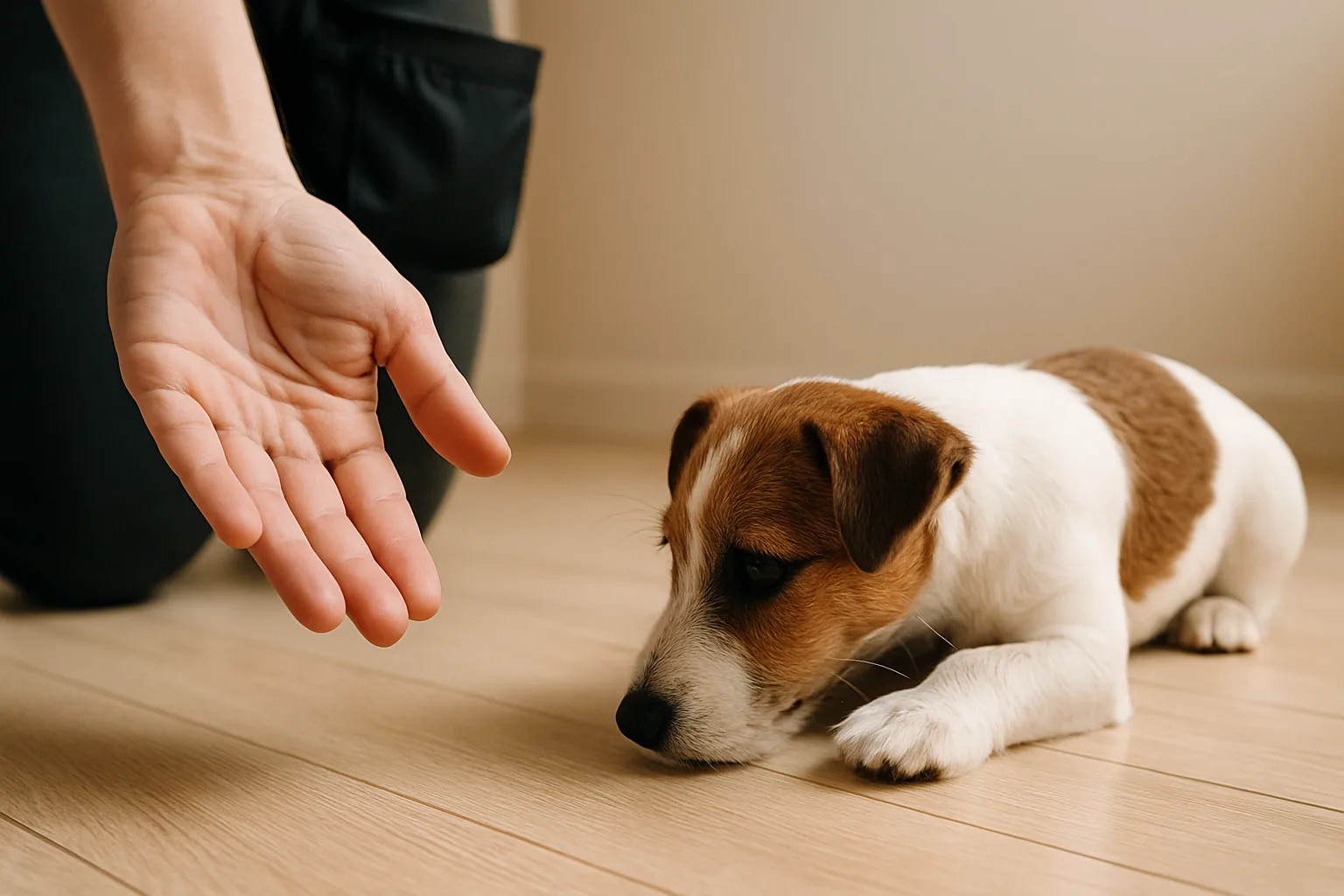
2. Close your hand. Same food, same motion, now hidden inside a loose fist. Your puppy follows scent and movement rather than sight, and most do not even notice the change. Open your hand and pay after they land in position, or better, deliver a different treat from your other hand so the thing they followed is not the thing they got paid with.
3. Lure with an empty hand. The scent lingers on your fingers and honestly it barely matters, because by now your puppy is following the gesture. Reward comes from the opposite hand or the pouch, after the behavior. This is the step where food genuinely stops being an antecedent, and it is the one people skip.
4. Shrink the gesture into a signal. Your sweeping arm becomes a small flat palm. Your finger-to-the-floor becomes a brief downward point. You are not inventing a new cue, you are eroding the old one until only the useful part is left. Shrink a little every few reps rather than all at once.
5. Put the word first. Say “sit,” pause for a beat, then give the hand signal. Over enough repetitions the puppy starts to anticipate, offering the sit on the word before your hand moves, and at that point the signal has become optional rather than load-bearing.
A useful rule of thumb: if you have lured the same behavior more than about ten times in total, the lure has stopped teaching and started propping. Puppies lured for weeks can still be faded, it just takes a few more reps at steps two and three, so nothing is broken if you are reading this in week six.
Where the Food Lives Now
Fading the lure is mostly a mechanical skill, and the mechanics are worth being fussy about.
Keep food out of sight and out of the working hand: a pouch clipped behind your hip, a pocket on the far side, a lidded tub on the counter for home practice. Close the pouch between reps, because an open pouch at puppy eye level is a visible treat by another name.
Do not reach until the behavior is finished. Cue, wait, let the puppy complete the movement, mark it, and only then does your hand travel. Reaching early rebuilds the antecedent you just spent a session dismantling.
Deliver the food where the puppy is rather than where you are, straight down to the mouth, in place. Bringing the treat back toward your own body pulls the puppy out of the position you just paid for. Vary the source too: left hand, right hand, pouch, a bowl on the shelf behind you. A puppy paid from six different places stops treating any one of them as the signal.
If your puppy stalls at step three, the usual culprit is not the fade but the paycheck, and a ten-minute preference test will tell you more than another week of guessing. Watch the whole puppy, not just its feet: one who is confused looks busy, offering behaviors and trying things, while one who has checked out sniffs the floor and turns away. Those need opposite responses, and the body language you learn to read in class is what tells them apart.
Make Praise Worth Something
“Good dog” is not automatically a reward. It is a noise, and a puppy has no reason to care about noises until they reliably predict something worth having.
The fix is straightforward classical conditioning and it works best started early. Say your praise word, warmly and a little higher than your speaking voice, then feed. Word first, food second, twenty or thirty times across a few days. You are not asking for any behavior during this, you are building a prediction. Once it sticks, praise starts working as a reinforcer in its own right, which gives you something to pay with when your hands are full, the pouch is at home, or your puppy did something excellent three seconds before you were ready.
Test it honestly: say the word in a neutral moment and watch. A puppy who has learned it will brighten, orient, and come toward you. A puppy who does nothing is telling you the pairing has gone stale, usually because the word has been said a thousand times without ever being backed up. Top it up for the rest of the dog’s life.
Life Rewards Are the Currency You Already Have
Food is fast and precise, which is why it dominates the teaching phase. But your day is already full of things your puppy desperately wants, and every one of them can pay for a behavior. The front door opening. The leash coming off at the field. Permission to go and sniff the interesting patch of grass. Greeting the neighbor’s spaniel. The ball leaving your hand. Dinner arriving.
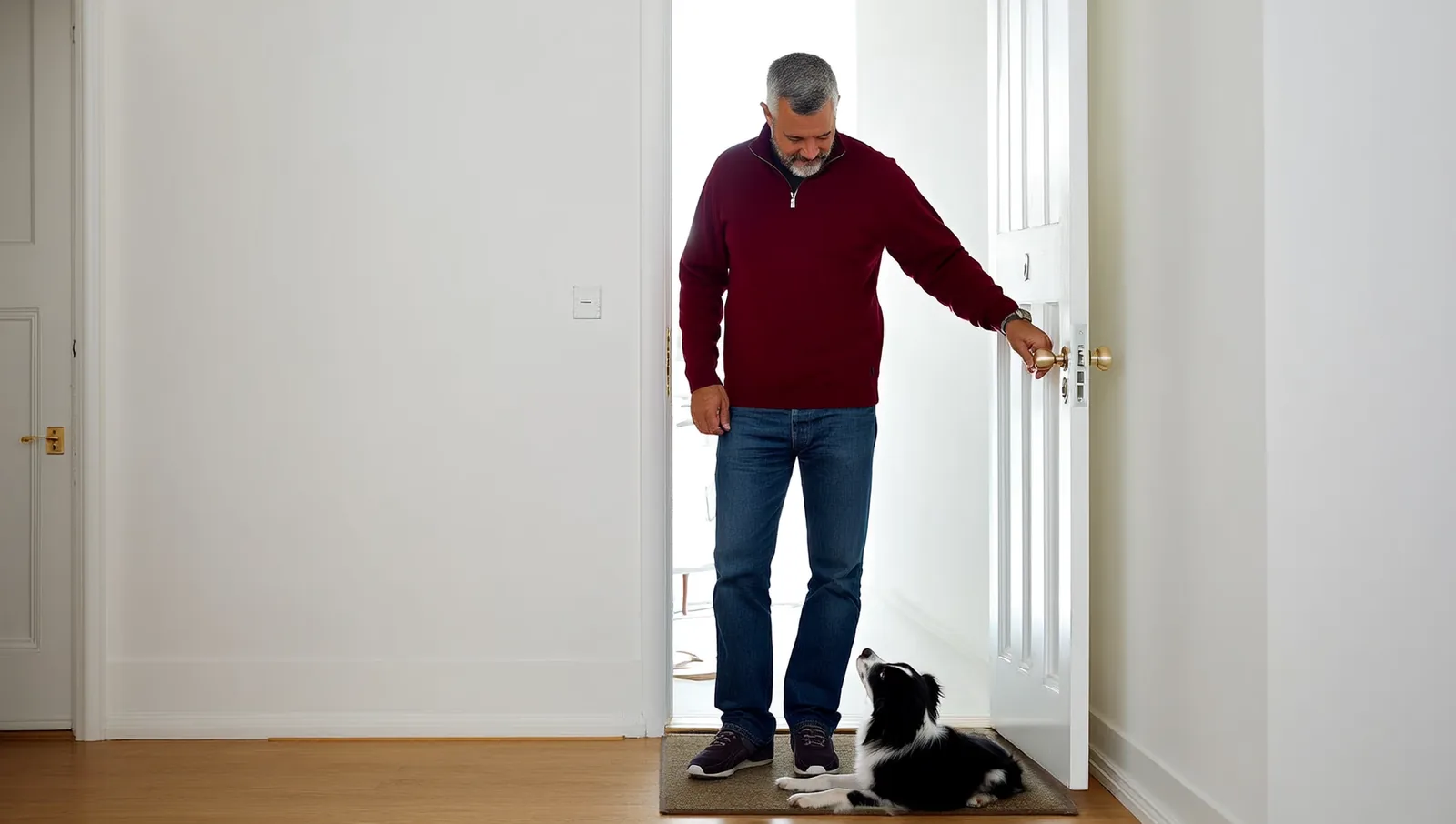
The move is simple: ask for something small first, then let the good thing happen. Sit before the door opens. Eye contact before the leash unclips. A short recall mid-walk, then “go sniff” as the payment. Structured this way, walks stop being training deserts and become the richest reinforcement environment you own, because sniffing is worth more to most puppies than any treat you could carry.
Keep it light, though. There is an old training fashion of making a dog earn absolutely everything, and applied rigidly it turns a relationship into a toll booth. A few life rewards woven through the day is plenty, and your puppy should still get good things for free.
Two Places the Lure Still Belongs
Do not over-correct into thinking visible food is always a mistake.
The first exception is any genuinely new or physically awkward behavior. Teaching a puppy to back up, to spin, to fold into a down on a slippery floor, or to step onto a wobbly surface at the vet’s is all easier with an honest lure for the first few reps. Use it, then fade it, same ladder.
The second exception is not a lure at all, and confusing the two causes real harm. In counterconditioning, food deliberately follows the scary thing regardless of what the puppy does. Skateboard appears, chicken appears. That is Pavlovian, aimed at how the puppy feels rather than what it does, and “you are bribing your dog” is a criticism that does not apply. If you are working through a graded exposure plan for a worried puppy, keep the food flowing and ignore anyone who tells you to make the puppy earn it first. The stuffed chew used in alone-time training is the same kind of exception: not a bribe for staying calm, but a change to the emotional shape of the absence.
When It Falls Apart Somewhere New
Expect the fade to look undone the first time you try it in a different room, in the garden, or on a busy pavement. Dogs generalize poorly, and each new environment is closer to starting over than owners expect. That is normal, not a relapse. Drop back to step two or three rather than all the way to an open lure: hidden food in a closed hand, big obvious gesture, generous pay, and you are usually back to a clean signal within a handful of reps. Do that in five or six locations and the behavior starts travelling properly.
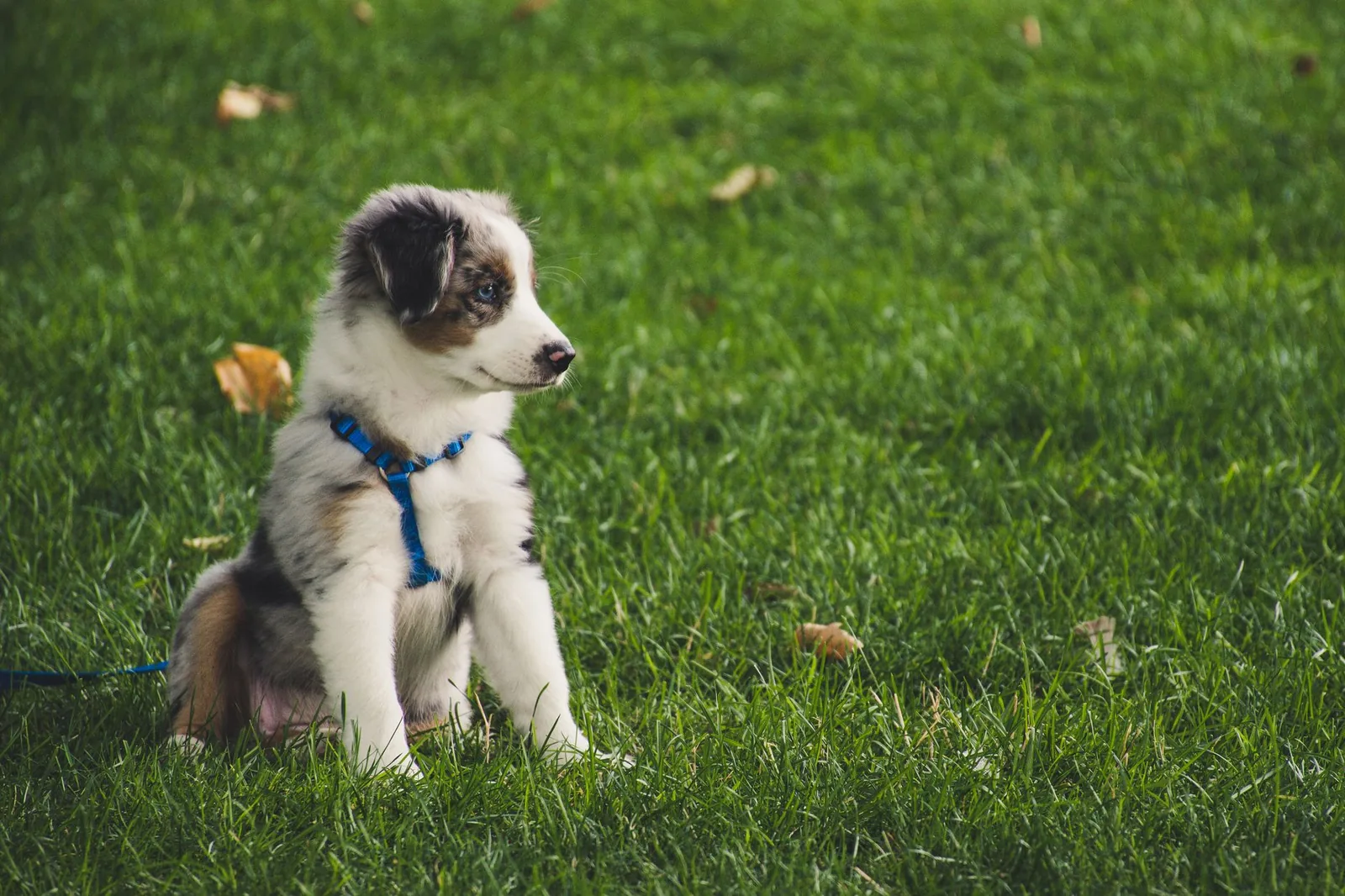
The end state is worth being clear about, because it is not a dog who works for nothing. It is a dog who does not need to see the payment before deciding to work, which is how the arrangement runs for the rest of us. Keep the treats and keep paying, generously and often, especially for hard things in hard places. Just keep them out of sight until the job is done.
If your instructor is already coaching the room on this in week three, that is a good sign about the class you picked, and it is worth listening for when you are sizing up a puppy class, because plenty of programs teach the lure enthusiastically and never get around to teaching the fade.
Further reading (sources)
- American Kennel Club on what to do when your dog only listens with a treat in your hand
- Peer-reviewed research on what the marker and the food each contribute
- PLOS ONE for the welfare evidence behind reward-based methods
- American Veterinary Society of Animal Behavior with why rewards outperform corrections
- American Veterinary Society of Animal Behavior on the position statement on humane training