Snake-Avoidance Training the Force-Free Way: Protecting Your Puppy Without Shock
Published on July 4, 2026
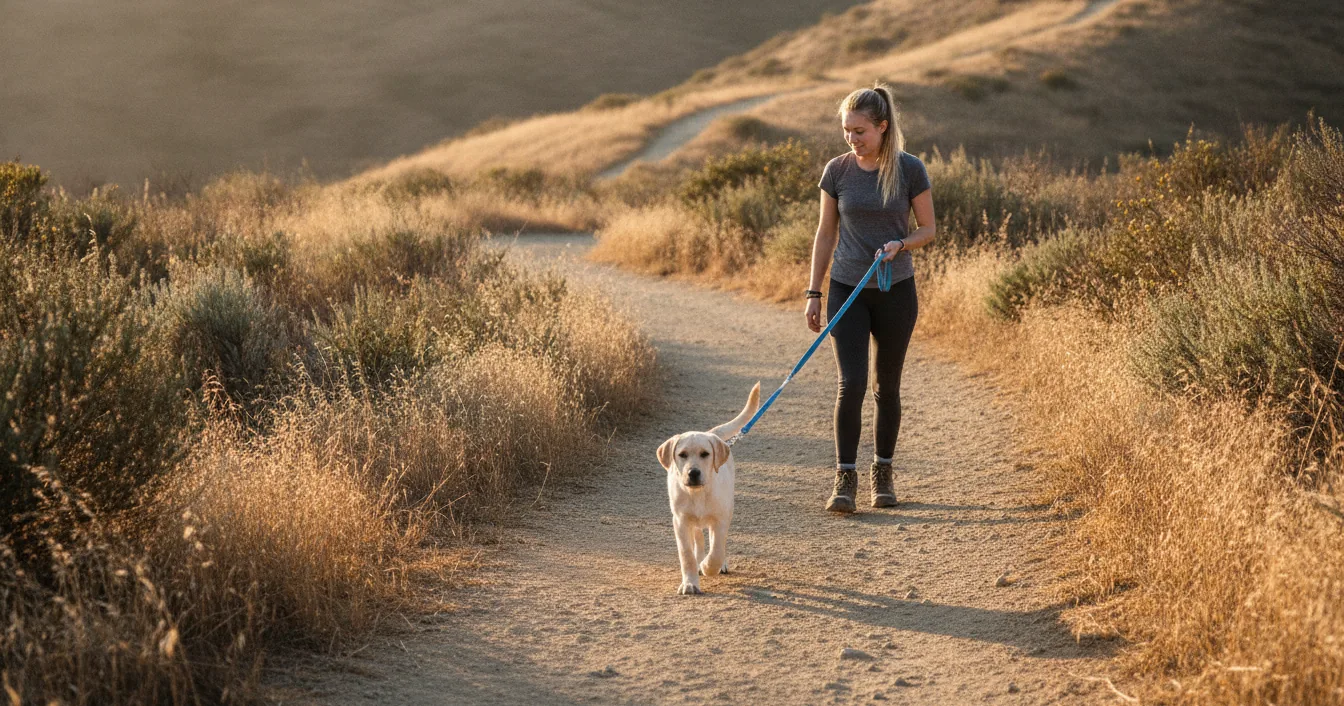
It Is Snake Season, and the Shock Collars Are Out
If you walk your puppy anywhere in California or the desert Southwest right now, the headlines have probably found you. Rattlesnake sightings are up this summer, and they are up early. California Poison Control has logged dozens of rattlesnake calls already this year, including two in Santa Barbara County, alongside three reported human fatalities in the state, a heavier toll this early than a normal season brings. The old mental model of snakes as a July-and-August problem no longer holds. In much of the West the risk window now runs from March clear through October.
Predictably, a familiar service is being marketed hard to worried owners: rattlesnake aversion training, usually shortened to RAT. Most of these clinics run the same playbook. Your dog is fitted with a shock collar and walked past stations rigged with the scent, sight, and sound of live (muzzled) rattlesnakes. Every time the dog investigates, it gets shocked. The idea is that the dog comes to link that jolt of pain with the snake and learns to bolt the other way. Sessions run around $90, with longer programs reaching a few hundred dollars, and trainers recommend annual refreshers.
Here is the thing the sales pitch skips: you do not have to hurt your puppy to keep it safe from snakes. There is a force-free way to build the same protective habits, and for a young dog still inside its socialization window, it is very likely the smarter long game.
Why the Shock Approach Is a Bad Bet for a Puppy
Even the trainers who sell RAT courses admit no method is foolproof. So the honest question is not “does a shock stop a dog once,” it is “what else does that shock teach a developing puppy, and what does it cost you if it goes sideways.”
Aversive training has a well-documented habit of producing fallout the trainer never intended. A puppy zapped near a snake does not read your mind about what the lesson was supposed to be. It might decide that tall grass is dangerous, or that the hiking trail is dangerous, or that the smell of the outdoors is dangerous, or, worst of all, that the person holding the leash is the thing that makes pain happen. During the socialization window, roughly eight to sixteen weeks, a puppy’s brain is unusually plastic and it is writing durable, hard-to-overwrite associations about the whole world. A single bad scare in that window can seed a lifelong fear of the very outdoor environments you were hoping to enjoy together. This is exactly why the socialization window is so critical to protect.
The professional consensus has moved for good reason. The evidence that shaped modern, ethics-forward training points away from aversive tools and toward reward-based methods that build reliable behavior without the collateral damage. Snake country does not earn an exception to that science. It raises the stakes on getting it right.
Management Is the Real Backbone
Force-free snake safety leans first on something unglamorous and deeply effective: you manage the environment so the dangerous encounter is far less likely to happen at all. No trained cue, and no shock collar either, is as reliable as simply keeping your puppy out of striking range.
- Keep your puppy on leash on trails during snake season. A six-foot leash keeps a curious nose out of the rock crevices, brush piles, and grass tussocks where snakes rest.
- Time your outings. Rattlesnakes are most active at dawn, dusk, and through warm evenings. Midday in high heat they hide, so a mid-morning walk in hot months carries less risk than a golden-hour one.
- Stay on the open, cleared center of the trail. Steer wide of tall grass, wood and rock piles, and the shady base of boulders.
- Learn the sound. That dry, sprinkler-like rattle is a warning. If you hear it, stop, locate it if you can, and back away the way you came.
- Consider skipping the retractable leash in snake terrain. It lets your puppy range fifteen feet ahead into exactly the cover you want to avoid.
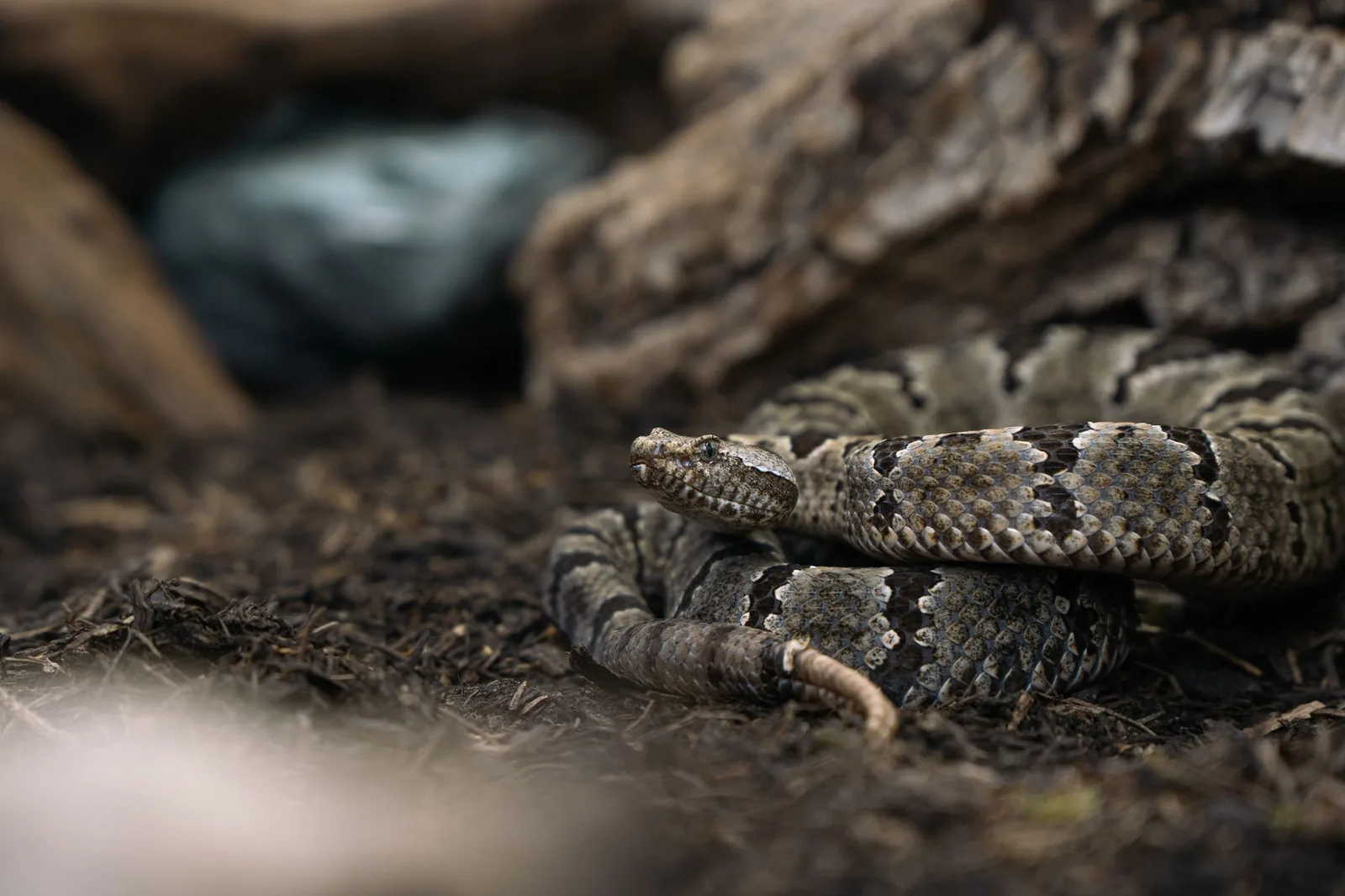
Management is not a fallback for when training fails. It is the main event. The trained cues below are the backup layer for the moment management is not enough.
Build a Rock-Solid “Leave It”
“Leave it” is the single most useful safety cue you can teach, and it generalizes far beyond snakes to dropped medication, chicken bones, and roadkill. Built with food instead of pain, it becomes a behavior your puppy performs happily rather than one it fears.
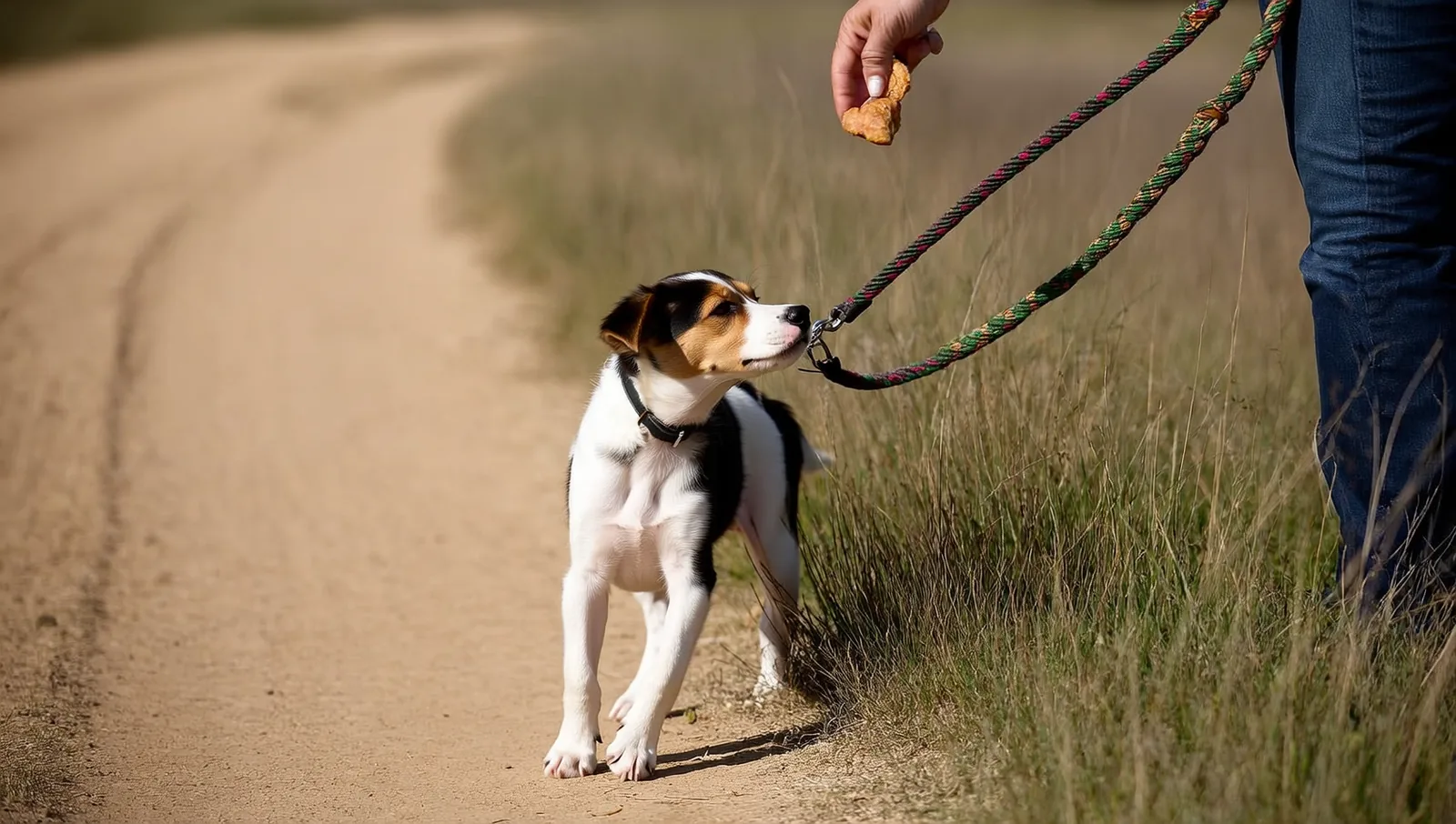
Start indoors with zero distractions. Put a boring treat in your closed fist and let your puppy sniff, lick, and paw at it. The instant it backs off, mark that moment with a “yes” or a clicker and pay from your other hand with something much better. The lesson lands fast: ignoring the thing on the ground makes a better thing appear. Once your puppy turns away from your closed fist reliably, say “leave it” just before you present it, so the words come to predict the game.
Progress in small steps. Move to an open hand, then to a treat on the floor you can cover with your foot, then to walking past a treat on the ground, then outdoors, then on a real trail with real distractions. The order matters, and the payment matters even more. For a cue you may one day need to override a puppy’s instinct to investigate a coiled snake, kibble will not cut it. Use your puppy’s genuine top-tier reward, and if you are not sure what that is, a ten-minute preference test will tell you before you need the cue for real.
Train the Emergency U-Turn
The second pillar is an emergency recall, often taught as a U-turn: a trained, joyful about-face that spins your puppy away from something ahead and back to you at speed. This is the cue for the snake you both notice at the same moment, ten feet up the trail.
Pick a distinct word or sound you will reserve for true emergencies and never dilute. Many trainers use a special word, a whistle pattern, or a kissy noise that means only one thing: whip around and run to me, right now, because a jackpot is waiting. Charge it up at home first. Say the word, then immediately rain down a fistful of exceptional treats for no reason at all. Do this until the word alone makes your puppy’s head snap toward you in happy anticipation. Only then add the turn: say the word while walking, turn and jog the other way, and pay hugely when your puppy catches up.
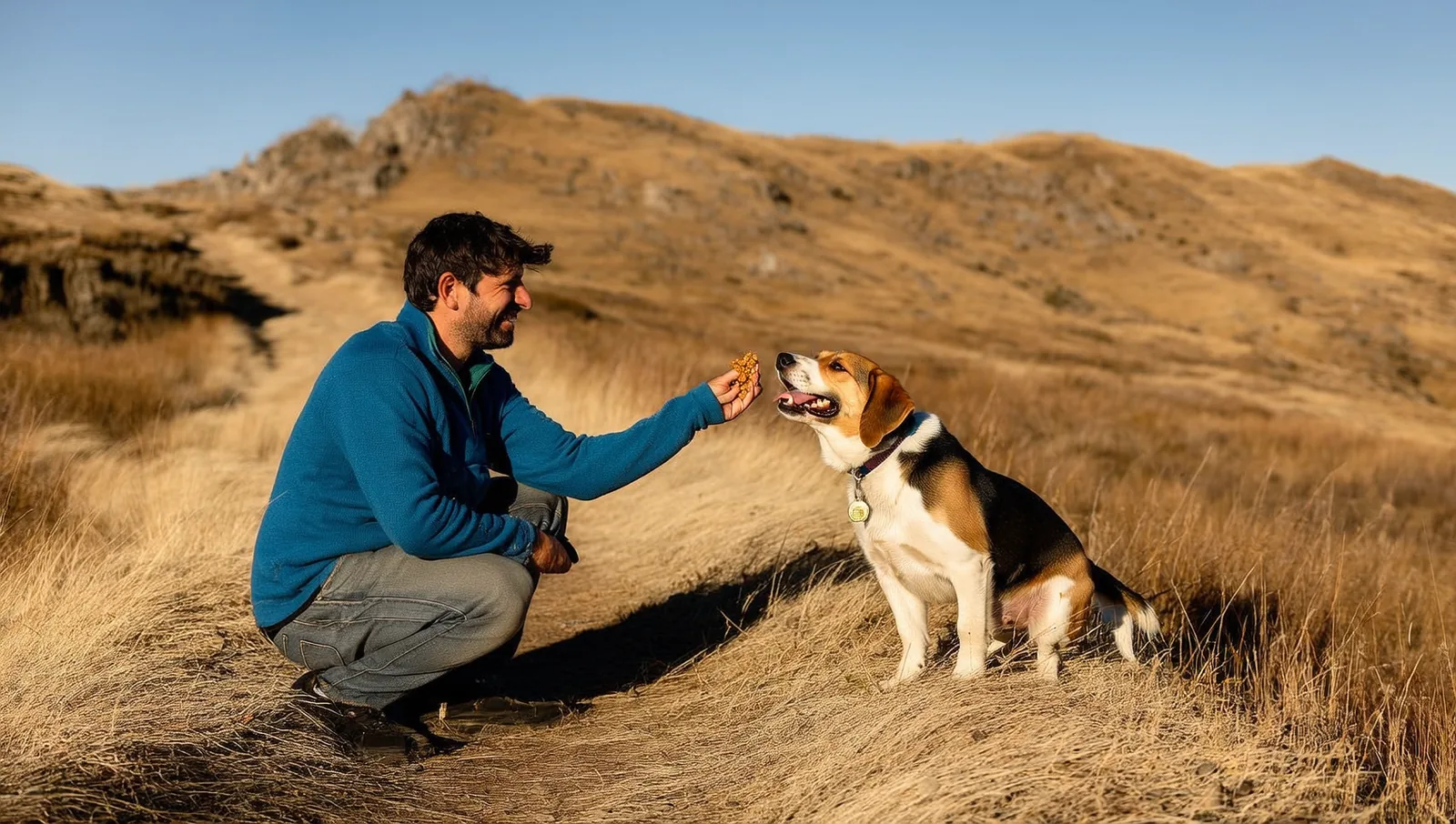
Keep the sessions short and upbeat, and run them when your puppy is rested rather than fried. An overtired puppy cannot consolidate a new cue, which is one more reason naps and learning are tightly linked. Practice the U-turn on ordinary walks long before you need it, so that when a real snake appears the behavior is automatic, not a coin flip.
Force-Free Scent Association, the Advanced Layer
If you want to add the recognition piece that shock clinics claim as their edge, you can teach snake awareness with reward-based scent work instead of pain. Using a shed rattlesnake skin sealed in a jar, or a commercial snake-scent product, some force-free trainers pair the smell with a trained “notice it and come back to me” response, heavily reinforced. The dog learns that the odor is a cue to retreat toward the handler, and retreating pays. It is the same underlying principle as the counterconditioning work used with fearful puppies, applied to a specific dangerous scent. This work is best done with a qualified force-free professional, since setting it up badly can muddy the very association you want crisp. It is a useful supplement, not a substitute for the leash-and-timing management above.
If Your Puppy Is Bitten
Even with perfect habits, snakes are fast and puppies are curious, so have a plan before you need one. A bite is a genuine emergency, and minutes matter.
- Get to an emergency vet immediately. Carry your puppy if you can so it stays as still as possible, which slows the venom’s spread. Call ahead so the clinic can prepare.
- Know your antivenom source in advance. Not every clinic stocks it. The free antivenom locator at veterinarysnakebite911.com lets you search by ZIP code, so map your nearest stocked hospital before the season, not during the crisis.
- If the bite is on the face or neck, gently slip the collar off before swelling sets in.
- Do not apply a tourniquet, do not pack the wound in ice, and do not cut it or try to suck out the venom. Those old field remedies do real harm and waste the time you need for the drive. Skip human medications unless your vet directs otherwise.
A rattlesnake vaccine exists for dogs, and some owners in high-risk areas ask about it. The current veterinary view is that it may buy a little time but is no replacement for emergency treatment, so treat any bite as urgent regardless of vaccination status and let your own vet advise whether it fits your situation.
Choose Your Trainer as Carefully as Your Trail
If you do enroll in a class for snake work or anything else, vet the instructor the same way you would any puppy class. A trainer who reaches first for a shock collar, on snakes or on anything, is telling you where they sit on current welfare science. The best protection you can give a puppy in snake country is not a jolt of electricity. It is a leash used well, an outing timed smartly, a “leave it” and a U-turn built on cheese and joy, and a bite plan you hope you never open. That toolkit keeps your puppy safe without asking it to be afraid of the world you are trying to share.
Further reading (sources)
- The Santa Barbara Independent on how snake sightings are climbing and what aversion trainers are selling
- Veterinary Snakebite 911 for finding a hospital that stocks antivenom near you
- American Veterinary Society of Animal Behavior with the position statement on humane, reward-based training
- American Veterinary Medical Association on what owners should know about the canine rattlesnake vaccine
- Fear Free Pets for why early scares leave lasting marks on a young dog