Loose-Leash Walking for Puppies: From First Collar to Confident Neighborhood Walks
Published on August 20, 2026
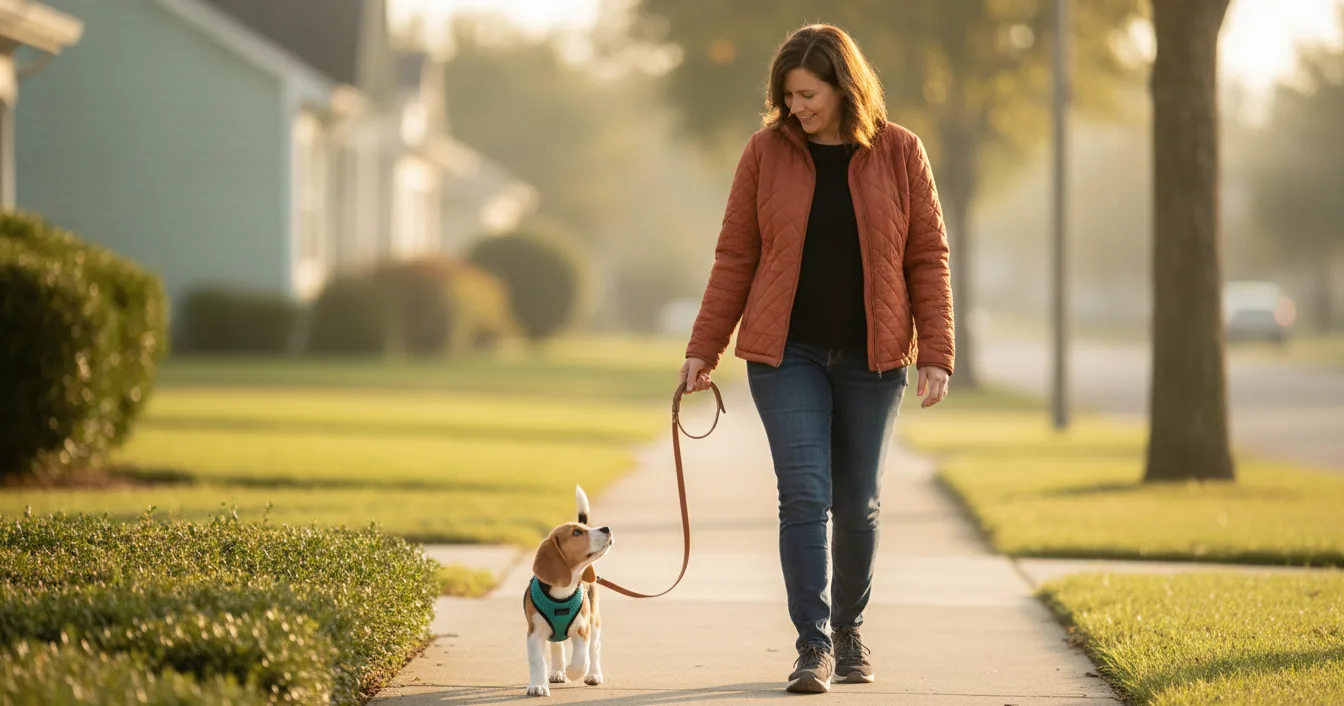
Ask a room of puppy owners what they most want from six weeks of class and the answer comes back the same everywhere: a dog who can be walked. Not a competition heel, not a party trick. Just an ordinary trip round the block that does not end with a sore shoulder and a puppy dangling off the end of a taut line.
Then look at the class syllabus. Loose-leash walking usually gets fifteen minutes in week four, in a hall full of other puppies, on a slick floor, with everyone crossing paths. It is the single hardest environment you could pick for a skill that has to be built somewhere quiet and boring. This is not a failure of the class. There is only so much a group setting can do, and instructors know it, which is why they keep telling you the real work happens at home between sessions.
So here is the whole progression, from the first day the collar goes on to the month your adolescent forgets everything.
Start Before the Leash Exists
At eight or nine weeks, the leash is not the project. The gear is.
A collar or harness is a strange thing to have appear on your body, and a puppy who was never given a say in the matter often spends the next six months trying to back out of it. Spend three days making the equipment predict food. Hold the harness out, let the puppy sniff it, feed. Rest it over their back for a second, feed. Fasten one strap, feed, then undo it. Fasten it, feed a handful, take it off again before they get worried. Short sessions, several a day.
Step-in harnesses are worth a specific note, because they are genuinely easier for puppies who hate anything going over their ears or face, but they ask the puppy to stand still while you place their feet. Whole Dog Journal makes the point that dogs who dislike having their paws handled find that harder, not easier, so a few days of paying your puppy for calm foot handling pays for itself.
Then clip the leash on indoors and do nothing with it. Let it drag (supervised, on carpet, never near stairs) while the puppy eats dinner or chews something good. The goal is that a line attached to the body becomes background furniture rather than a cue that a struggle is starting.
What You Are Actually Training
Almost everyone starts from the wrong end of this problem. They ask how to stop the pulling. Pulling is not a behavior you can subtract; it is what happens by default when the puppy wants to be somewhere and the leash is the only thing in the way.
Two facts explain everything that follows.
The first is that pulling works. Every time a puppy leans into the harness and the walk continues, the lean got them closer to the lamp post. Forward motion is the reward, delivered instantly, dozens of times per walk, and it is a far better trainer than you are.
The second is that “loose leash” is not a behavior either. Slack in the line is a result. The behavior is your puppy choosing to be in a particular place relative to your leg. That is the thing you can see, mark, and pay for, and once you start paying for position, the slack takes care of itself.
Which makes the mechanics blunt. Reinforce position generously. Make sure pulling never buys forward movement. That is the whole method, and everything below is just how to deliver it without losing your temper on a Tuesday evening.
Indoor Hallway Reps
Your first twenty sessions should be indoors, in a corridor, with nothing interesting happening. Ninety seconds each. A hallway is perfect because it removes the sideways options and lets your puppy discover position almost by accident.
Stand with your puppy loose beside you. The moment they are near your leg, mark with your clicker or marker word and feed the treat down at the seam of your trouser leg, not out in front of your body. Where you deliver the food is where you are building the habit, and owners who feed at chest height wonder for weeks why their puppy walks in front and jumps.
Resist the urge to hold food out in front of your puppy’s nose and tow them along the corridor. That is a lure, and a lure held for six weeks becomes part of the cue, which is a separate mess to clean up later. If you have already fallen into it, the fade is mechanical and quick.
Take one step. Mark and pay for the puppy staying with you. Then two steps, then three. When five steps in a row feel easy, turn round and walk the other way. When it looks boring, you are doing it right.
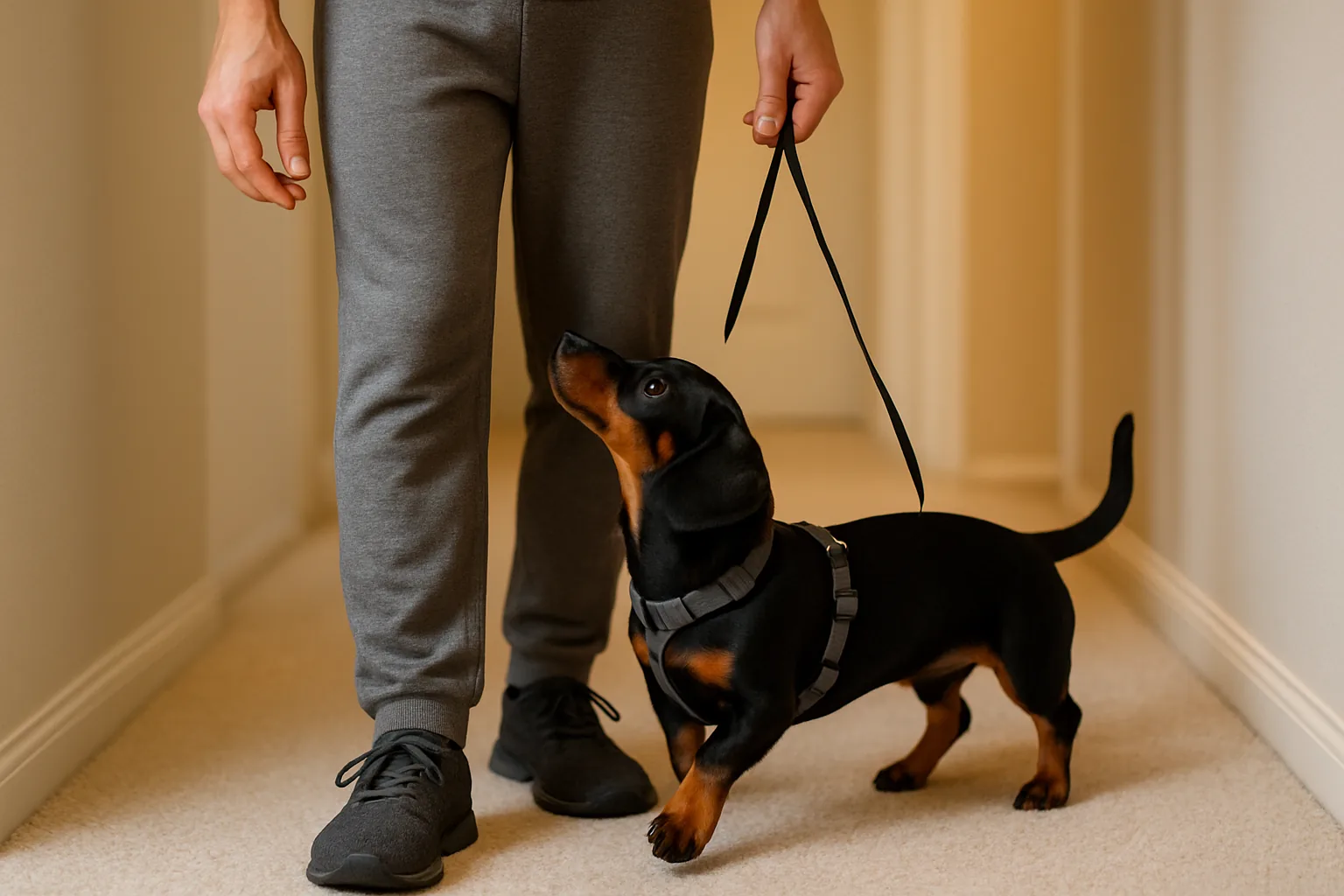
Two small things make a disproportionate difference. Pick a side and stay on it, because a puppy who is sometimes left and sometimes right is learning nothing about position. And feed high-value food for this in particular, because you are competing with the entire outdoors later. If your puppy shrugs at kibble, run a ten-minute preference test rather than guessing at what they will work for.
Once you have twenty steps of slack line in the hallway, move to the kitchen, then the garden, then the driveway. Each new place requires you to lower your criteria. Drop back to three steps and rebuild. This is normal and it is not backsliding.
The Equipment Conversation, Honestly
Nothing you buy will teach your puppy to walk nicely. Equipment buys you management while the training catches up, and that is a real and useful thing, so long as nobody sells it to you as the solution.
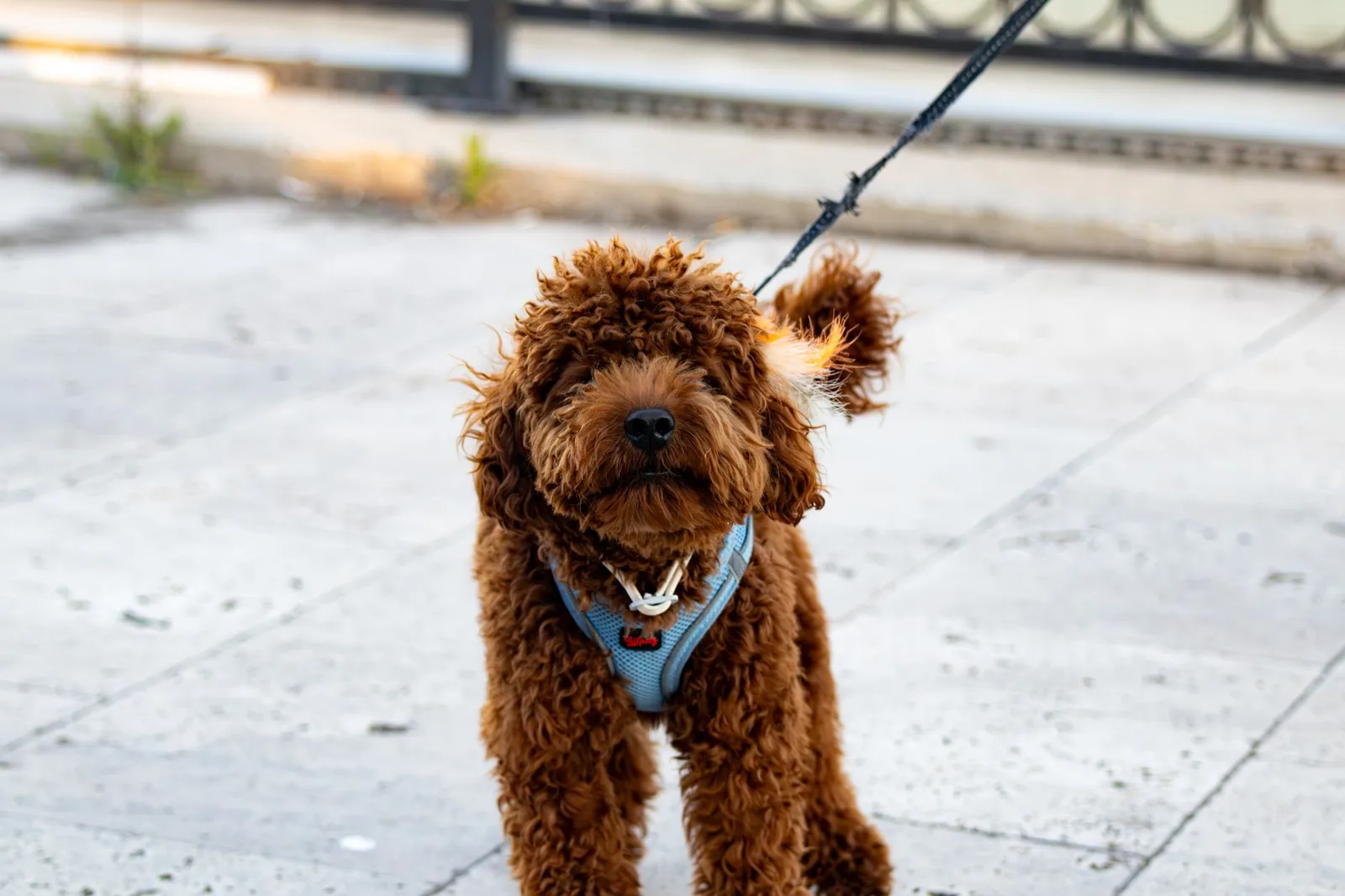
Worth using. A well-fitted Y-shaped harness that sits clear of the shoulder joint and does not restrict the front legs. A front-clip attachment redirects a lunge toward you instead of letting the puppy drive straight ahead, which takes the physics out of the problem without taking anything out on the puppy. Many harnesses now offer both a front and a back ring, and Wirecutter’s harness testing is a reasonable starting point for fit and build quality. Use a plain four- to six-foot leash. A long line of fifteen or twenty feet is excellent for sniffing sessions in open space.
Not for a puppy learning to walk. Retractable leashes teach constant tension by design, since the only way to get more line is to pull against the brake. They also cause serious hand and finger injuries when the cord runs through a grip.
Not at all. Prong collars, choke chains, slip leads used as corrections, and electronic collars all work by making pulling hurt or startle. They can suppress the behavior quickly, which is exactly why they keep selling, but the fallout lands on a young dog with an unfinished nervous system: pain and fear get paired with whatever the puppy was looking at when the correction landed, which is often another dog on the pavement. The American Veterinary Society of Animal Behavior’s position on aversive methods is unambiguous, and any trainer who reaches for these on a fourteen-week-old is telling you which class you should have picked. If you are still choosing, this is one of the specific questions worth asking before you enroll.
Head halters sit in a middle category. They are not painful and they give real control on a strong adolescent, but they need a proper conditioning protocol of their own or the dog spends the walk trying to paw the thing off.
Outdoors: Sniffing Is the Point
The first outdoor walks should barely be walks. Stand at the end of your driveway and let your puppy look at the world. Feed for glances back at you. Go inside after four minutes. That is a complete, successful session.
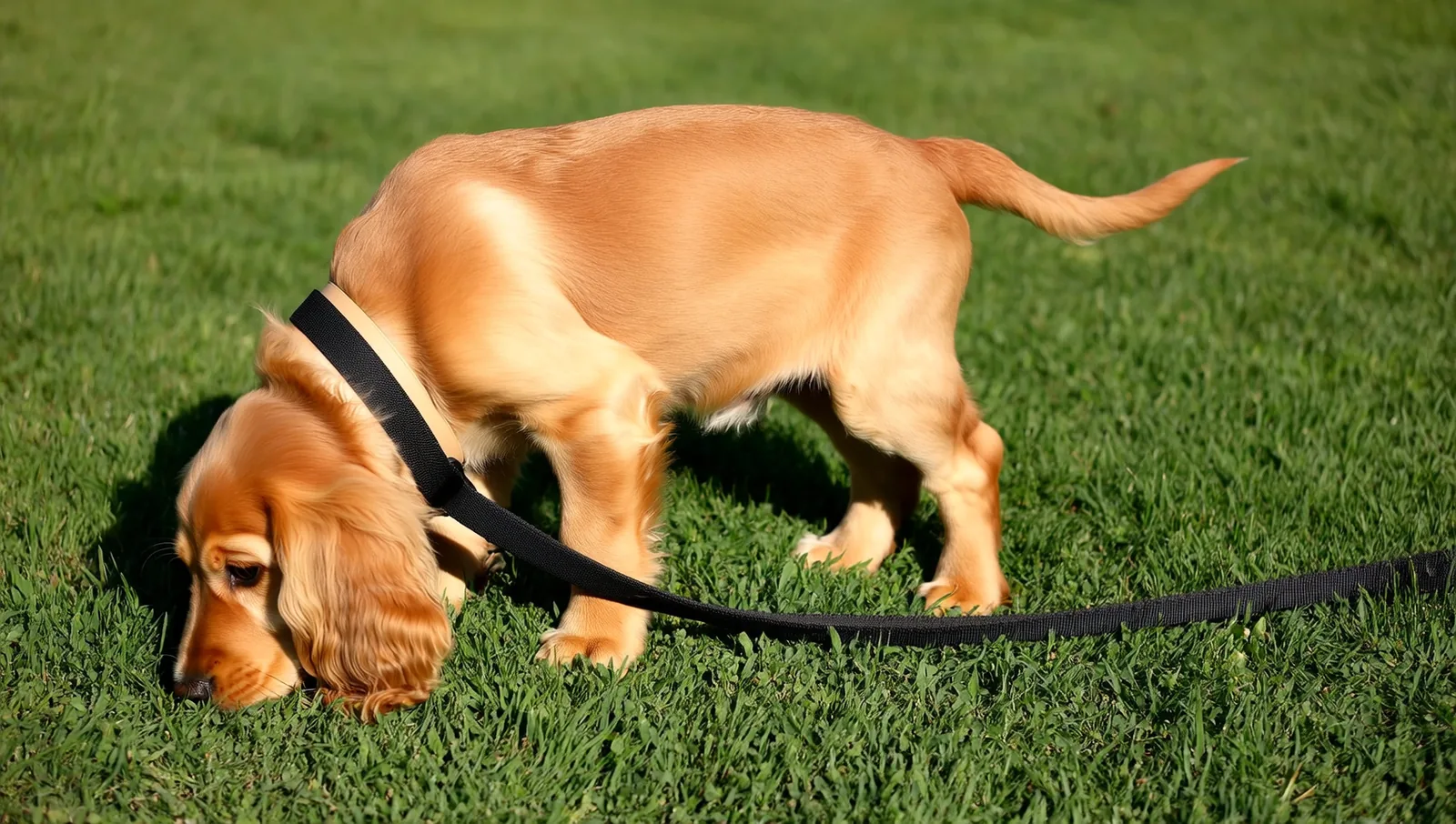
When you do start moving, remember what a walk is for. A dog’s nose is the reason they want to go out at all, and a puppy dragged past every interesting smell for twenty minutes is a puppy who has learned that walking with you means being denied things. Build sniffing into the structure instead of fighting it. Walk a stretch on a loose line, then say “go sniff” and let the leash out to let them investigate for a minute or two. The sniff is the paycheck, and it is worth more to most puppies than anything in your pouch.
That approach also helps with the other half of the complaint: a puppy who plants their feet. A puppy who freezes on the pavement is usually overwhelmed, tired, or unsure of the surface, and dragging them adds fear to the equation. Wait. Drop the tension out of the line, crouch slightly, and let them choose to move, then pay hugely when they do. If it happens on the same corner every time, something about that corner needs a graded exposure plan rather than more walking.
Weather counts as a distraction too. The AKC’s advice on rain and snow amounts to conditioning the surface and the gear before you need them, which is much easier in October than in a January downpour.
Leash Biting
Grabbing the leash and thrashing is one of the most common between-class complaints and almost never means what owners think. It is arousal, frustration, or fatigue, not defiance. Puppies do it most in the first minutes of a walk, at the peak of excitement, and at the end when they are past their limit.
Pulling back turns it into the best tug game available, since you are supplying resistance. Instead, stop moving, hold the leash still and boring against your body, and wait for the release. Then immediately restart the walk. Carry a legal tug toy and swap it in if your puppy needs to bite something. Cut the walk shorter than the point where it usually starts, and check the clock, because an overtired puppy looks exactly like a badly behaved one. If the biting is escalating rather than settling, the honest read is often that the puppy needs a nap rather than more training.
The Adolescent Backslide
Somewhere between five and ten months, your beautifully trained puppy will walk you into a hedge.
This is developmentally normal. The socialization window has closed, the world has got more interesting, hormones are in play, and a body that has doubled in size makes pulling far more effective than it used to be. Owners who were not warned about this stage tend to conclude that positive methods failed and go shopping for a prong collar, which is the worst possible moment to introduce pain.
The fix is the same one you used at ten weeks, applied without embarrassment. Drop your criteria back to three steps. Raise the value of your food. Go back to quiet streets for a few weeks. Add a front-clip attachment if you are being physically outmatched. It generally passes in six to eight weeks, and the dog that comes out the other side walks better than they ever did as a puppy, because the behavior got rebuilt on top of an adult body.
One last framing that saves people a lot of grief: loose-leash walking is not heel. Heel is a precise position held on cue for a short duration, useful for crossing a busy road, and it is exhausting for a dog to maintain. Loose-leash walking is a default state with a wide margin, where anywhere within the length of a slack line is fine. Confusing the two leaves owners policing a puppy for six blocks and enjoying none of it. Ask for heel when you need it, and for the rest of the walk, let the line hang and let the dog be a dog.
Further reading (sources)
- American Kennel Club on the behaviors worth teaching in a puppy’s first weeks home
- American Kennel Club for working through the training problems that derail new owners
- Whole Dog Journal with how to pick and fit a step-in harness
- Wirecutter on what separates a well-built dog harness from a cheap one
- American Veterinary Society of Animal Behavior on the position statement on humane dog training