Trigger Stacking in Puppies: Why a Good Puppy Melts Down After Class
Published on November 3, 2026
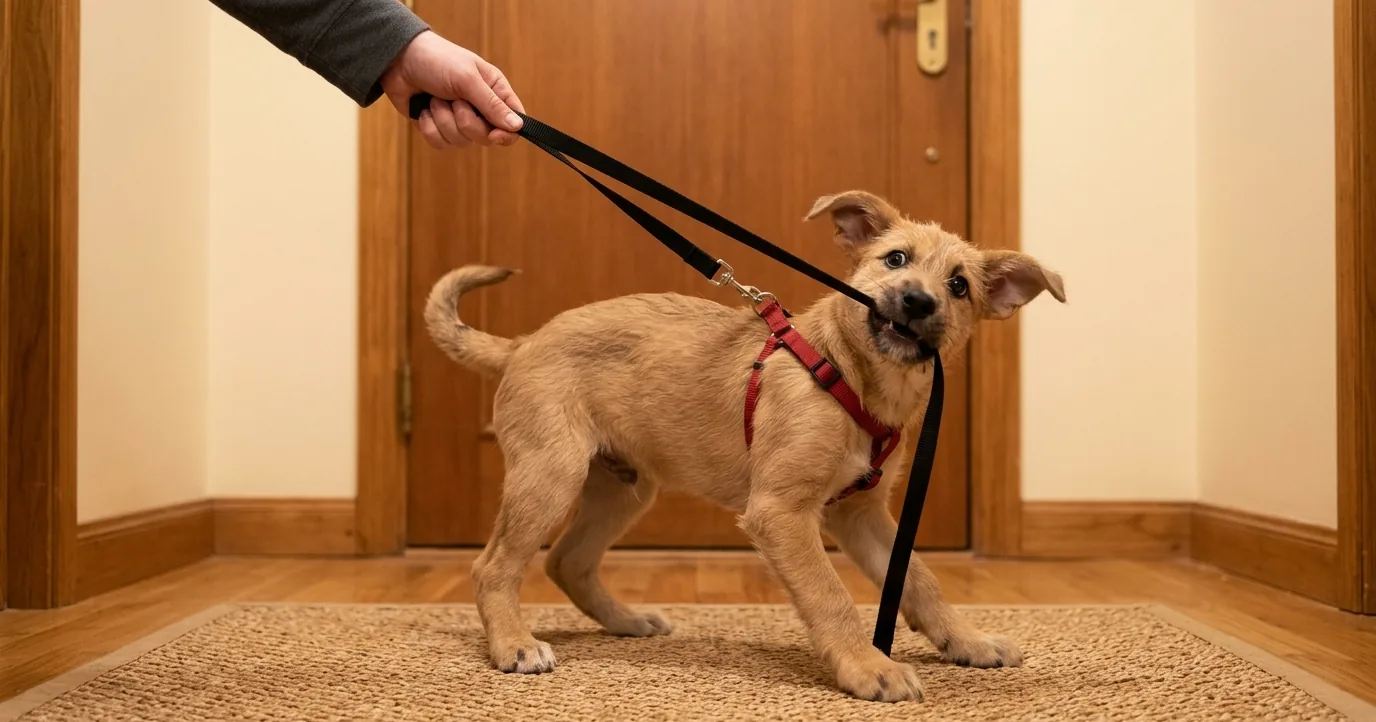
On paper it was a great Saturday. Your puppy had a vet check in the morning and barely flinched at the thermometer. Your sister came over for lunch, and her kids took turns carrying the puppy around the garden. At four you drove to puppy class, where your puppy held a sit next to five other puppies and the instructor said so out loud. Then, just after seven, the dishwasher clunked, and your puppy came apart: barking at the machine, spinning in circles, and finally grabbing your son’s sleeve and hanging on.
Nothing in that day was a disaster on its own. The day itself was the problem. Trainers call this trigger stacking: stressful or exciting events piling up faster than a puppy can recover from them, until something trivial tips it over. Because stacking follows a pattern, you can plan around it. This guide explains how it works, why the blowup so often comes hours after class instead of during it, and how to build recovery time into a class day.
What Trigger Stacking Means
The phrase comes from dog trainers rather than from a lab, but the idea is easy to grasp. Writing for the American Kennel Club, certified trainer Sassafras Patterdale describes it as a dog meeting several stressful or scary situations within a short span, then reacting out of all proportion to a minor one. The important part of her definition is timing: the triggers arrive back to back, without a chance to recover from the ones before.
Trainers describe the line between coping and not coping as a threshold. A puppy below threshold hears the doorbell, glances up, and goes back to its chew. A puppy over threshold cannot think straight. Some bark, lunge and grab. Others go the opposite way and shut down: ears flat, body still, deaf to their name. Patterdale warns that the shut-down version should not be mistaken for calm.
A cup is a helpful picture. Every event in the day pours a little in, and a puppy can carry a nearly full cup quite calmly. Then one small thing adds the last drop, the cup overflows, and to you it looks as though your puppy lost its mind over a kitchen appliance. The dishwasher did not do that. The vet, the visitors, the car and the class filled the cup, and the dishwasher just happened to be next.
What Goes Into a Puppy’s Cup
For a puppy, triggers are not only frightening things. Almost anything new or intense counts:
- Handling: a vet exam, a nail trim, a stranger reaching over its head, a child picking it up
- Novelty: a new room, a slippery floor, a first ride in an elevator
- Noise: traffic, a barking dog, a dropped pan, a room full of yelping puppies
- Other dogs: greetings, being sniffed, being body-slammed in play
- The car: for many puppies the ride is a trigger of its own
- Excitement: wrestling, chase games, a thrilling visitor
- The body: hunger, a full bladder, a sore teething mouth, too little sleep
Excitement is the one owners forget. The system that revs up a frightened puppy also revs up a delighted one, which is why the same involuntary reflex can raise a puppy’s hackles in a happy wrestle and in a scary moment (our guide to puppy hackles in play explains how). A puppy who spent the class play break tumbling with three others has filled its cup more than one who sat quietly on a mat, even though it loved every second.
Why the Meltdown Comes After Class
Owners are often baffled by the timing. The puppy was fine in class. It took its treats and held its sits. The meltdown came hours later, at home, over nothing.
Part of the answer is that class is structured. There is food every few seconds, a simple job to do, and a handler right there, and that structure holds a lot of puppies together while the cup is filling. The bigger part is that the stress response outlasts the trigger. Patterdale notes that it takes time for stress hormones such as cortisol to fall once a trigger has gone. Some dogs compose themselves quickly. Others carry the effects for days.
A small Belgian study gives a sense of the clock. Researchers from the University of Namur and Ghent University measured stress markers in the saliva of 32 puppies, about 17 weeks old on average, before and after a short test in their own homes. The puppies met a run of everyday stimuli in random order, among them the sound of a barking dog, a squeaky toy and a vacuum cleaner, and finished with two startles: an umbrella popped open and a metal can of keys being shaken. Saliva was sampled 10 and 40 minutes after the test ended. A sharp rise at 10 minutes looked like a healthy response. Puppies whose levels were still raised at 40 minutes were rated by their owners as more fearful of strangers and harder to train, and the authors read that slow recovery as a puppy not coping well.
It was an exploratory study with a small sample, and the puppy results did not reliably predict how the same dogs behaved as young adults. But the core point for owners holds: the body is still dealing with a stressor well after it has gone. So the drive home is not a neutral gap. For a puppy still coming down, it is one more trigger landing on a full cup. So is the stop at the pet store on the way, the neighbor who wants to say hello, and the noise of the family dinner hour.
The Early Signs Most Owners Miss
Stacking is far easier to prevent than to repair, and prevention depends on noticing the cup filling. That is where most owners struggle. When a University of Pisa team asked 1,190 dog owners how they recognize stress, trembling and whining topped the list, followed by aggression, excessive barking and panting. Quieter signals such as looking away, turning the head, yawning and nose licking were named far less often. The researchers concluded that few owners can read stress in its early stages, which is exactly when stepping in costs the least.
On a class day, watch for the quiet end of the scale:
- Taking treats roughly, or refusing food it normally loves
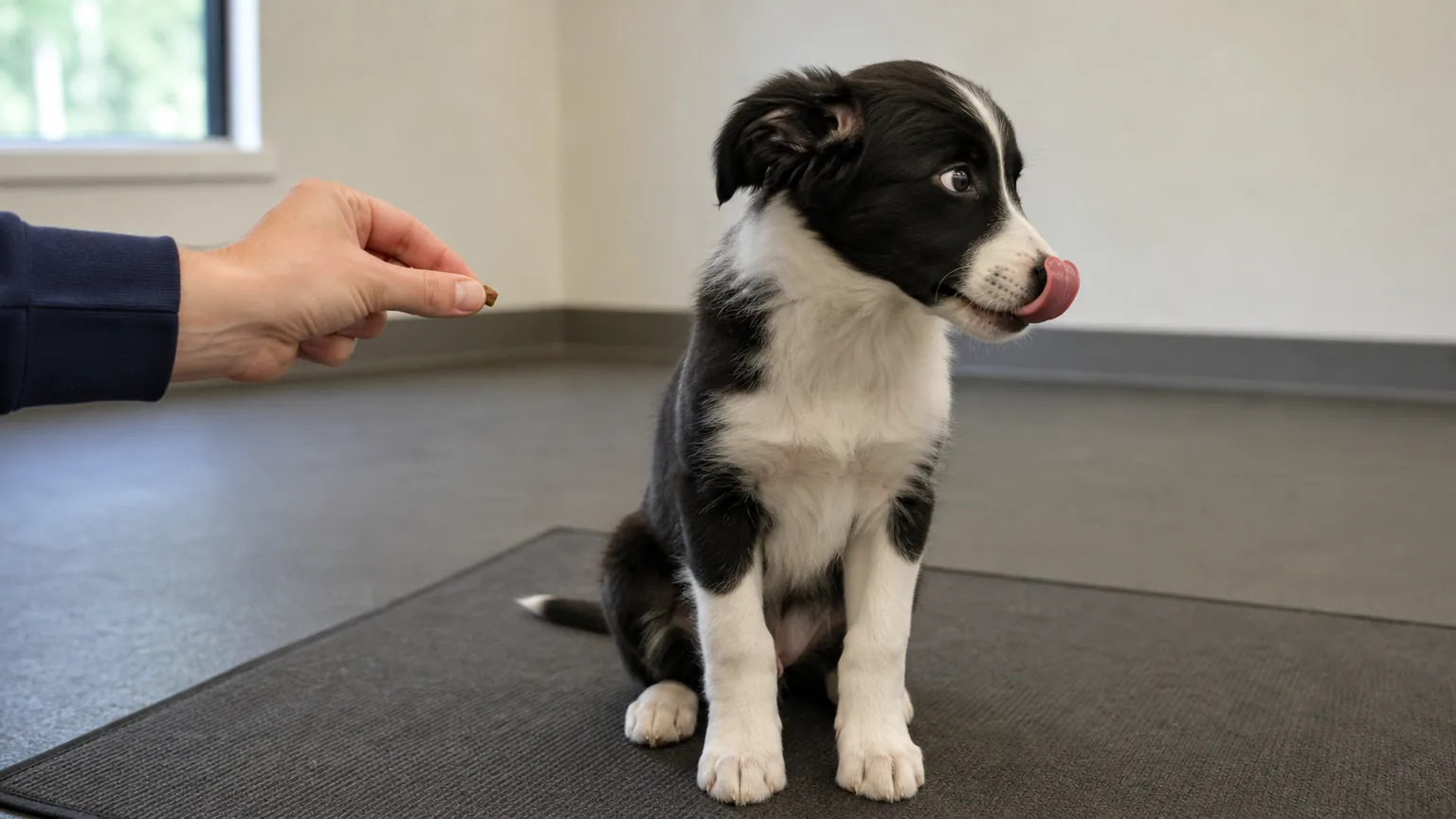
- Yawning when it is not tired, or licking its lips and nose with no food around
- Looking away, turning its head, or sniffing the floor instead of engaging
- Shaking off as if wet, or a sudden scratch
- Responding more slowly to its name or to a cue it knows well
- Mouthing harder and faster, or grabbing the leash
- Startling at small sounds, or scanning the room
- Failing to settle: popping up from a down, circling, pacing
Any one of these can mean nothing. Sometimes a puppy scratches because it itches. Several together, or one that keeps repeating, mean the cup is filling. Our guide to reading your puppy’s body language in class covers the in-the-moment read in more detail.
Stacked, Overtired, or Both?
Trigger stacking overlaps with plain overtiredness, and on a class day you usually get both. Young puppies need a great deal of sleep, and a long stretch awake wrecks their self-control on its own (our article on why your puppy sleeps so much has the numbers). The rough difference: an overtired puppy is frantic about everything, while a stacked puppy overreacts to particular small things it would normally ignore, like the doorbell, the dishwasher, or a hand reaching for its collar. Happily the treatment overlaps too: fewer new things, and more sleep.
Plan the Class Day Around Recovery
You cannot control everything on a class day, but you can control a surprising amount of what goes into the cup.
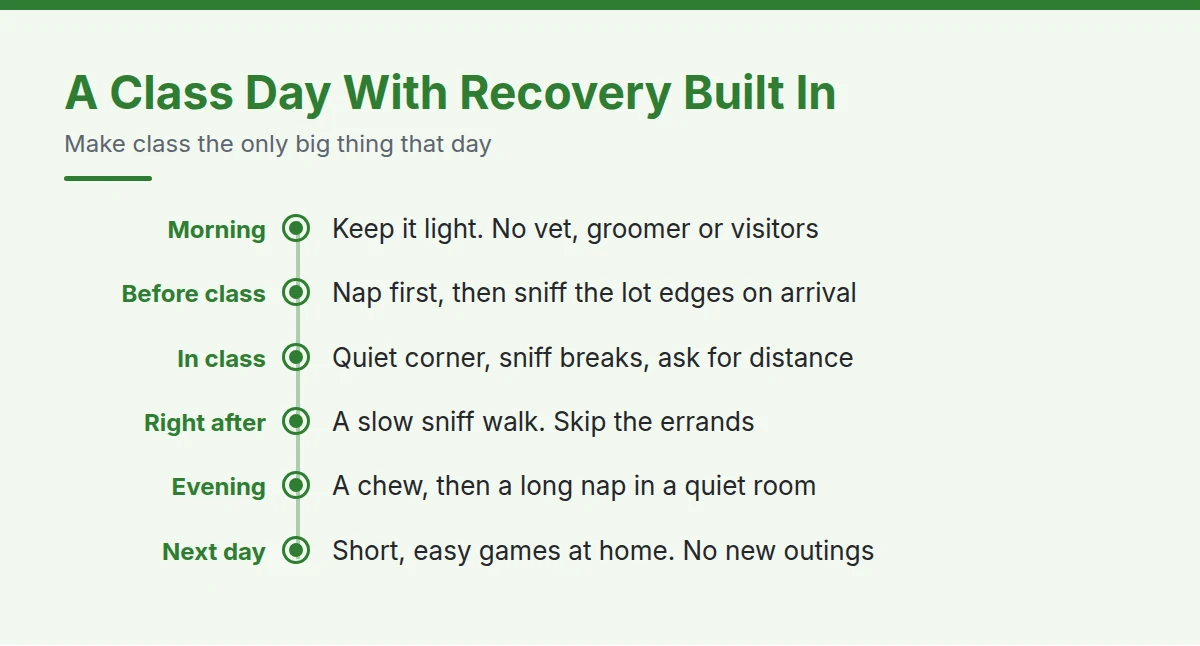
Before class, keep the day light. Make class the one big thing that day. Book the vet, the groomer, the visitors and the first trip to the hardware store for other days. If something unavoidable lands on class day, lower your expectations for class: watching from a quiet corner still counts. Let the puppy nap before you leave rather than tiring it out with a long game, and arrive a few minutes early so it can sniff around the edge of the parking lot at its own pace instead of being hurried into a busy lobby. If the lobby is chaotic, wait in the car until the room is ready.
In class, spend the cup carefully. Use a mat in the quietest corner, ask for a barrier or more distance if your puppy keeps scanning the room, and take a sniff break outside when you see the early signs. You are allowed to sit out the play session, or to ask for a smaller play group, if your puppy’s cup is already full. A good instructor will be glad you asked.
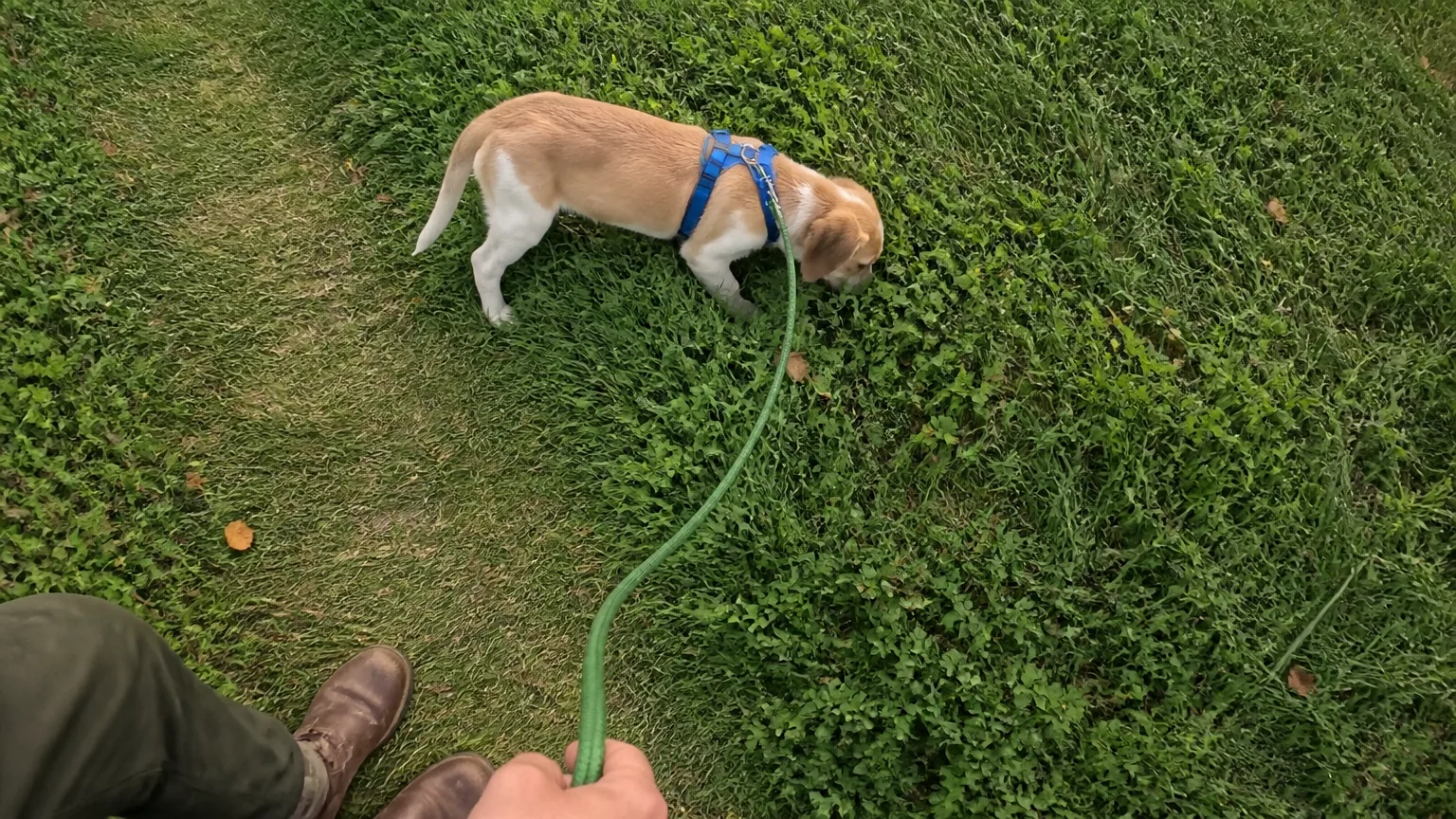
Straight after class, decompress before anything else. Skip the errands and head home, or to the quietest patch of grass you know on the way. Then give your puppy ten or fifteen minutes to sniff, on a loose leash or a long line, letting it choose the route and the pace. Sniffing is real work for a dog’s brain, and it seems to do more than tire a puppy out. When researchers Charlotte Duranton and Alexandra Horowitz gave 20 adult pet dogs two weeks of daily nosework or daily heelwork, only the nosework dogs became more optimistic on a cognitive bias test, a standard way of measuring an animal’s emotional state. Our guide to puppy exercise explains why a sniffy walk settles a puppy better than a brisk one.
At home, offer something to chew. Chewing is one of the ways many dogs bring themselves down. In a Whole Dog Journal piece on why dogs chew, veterinarian Jamie Richardson describes the repetitive action as calming, something that can “help shift a dog from a highly aroused state toward a more settled one.” She also suggests building chew time into the daily routine rather than saving it for when the dog is already misbehaving. A safe chew, a stuffed food toy, or a handful of kibble scattered in the grass to hunt for all work, and Patterdale recommends the same kinds of quiet activities for a dog recovering from a stacked day.
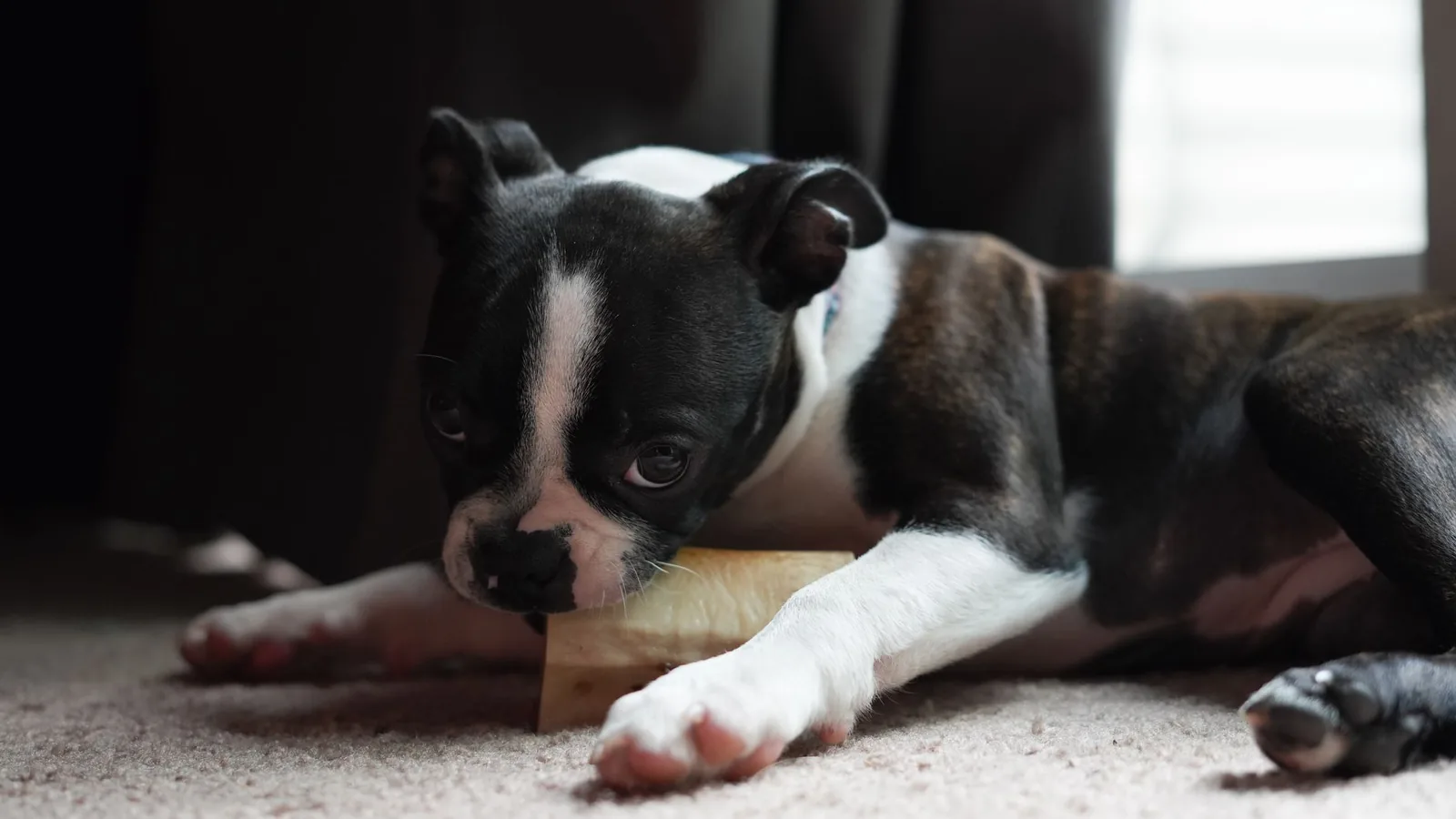
Then protect a long nap. Put the puppy in its crate or pen in a quiet room, dim the lights, and keep visitors and children away for a while. Sleep looks like part of how dogs recover. In a Hungarian sleep lab, Anna Kis and colleagues recorded 16 adult pet dogs after about six minutes of mildly unpleasant social experience: a short separation from the owner, then a stranger approaching in a threatening way and sitting silent. Compared with sessions that began with petting and play, the dogs fell asleep sooner and spent more of their sleep in REM, and the authors suggest the faster sleep may be a protective response to stress. The dogs were adults and the sample was small, but it fits what owners see. After a hard day, the nap is not optional.
The next day, go easy. One stacked day can leave a puppy jumpier for a while. Keep the next day quiet: short, easy training games at home, a sniffy walk, no new outings. Patterdale’s advice after a stacked episode is to give the dog more distance from its triggers in the next few sessions, even if it could work closer before.
Do Not Punish the Meltdown
The nip or the bark at the end of a stacked day is information, not defiance. Scolding adds one more trigger to an overflowing cup, and a puppy punished for its warnings can learn to skip the warning next time. Instead, interrupt calmly, take the trigger (or the puppy) out of the picture, offer a chew somewhere quiet, and turn the volume of the house down. Then look back over the day and count what went into the cup. Usually the answer is obvious, and so is the fix for next week.
If you have children, this is the moment to keep them back. A stacked puppy is not a puppy to hug, carry or play tug with, however sweet it looks on the sofa.
Socialization Still Matters. Spread It Out.
None of this is an argument for keeping a puppy at home. The early weeks are the main window for socialization, and they close fast, which is exactly why owners cram them. The American Veterinary Society of Animal Behavior calls the first three months of life the most important time for socialization, and wants puppies to meet as many new people, animals, stimuli and environments then “as can be achieved safely and without causing over-stimulation manifested as excessive fear, withdrawal or avoidance behavior.”
The answer is spacing, not less. One new place or person a day, each followed by downtime, beats a Saturday with five. If you want to check whether your puppy is getting enough without overdoing it, our guide to how much socialization a puppy needs has a simple two-week tally.
When It Is More Than a Long Day
Stress comes in degrees. Kate Mornement, an applied animal behaviorist writing for Whole Dog Journal, describes it as a spectrum running from mild through moderate to extreme, one that can affect health and behavior, especially once it becomes chronic. A wild evening after a packed day sits at the mild end. Talk to your veterinarian, and ask about a referral to a board-certified veterinary behaviorist, if:
- your puppy is not back to normal after a good night’s sleep
- meltdowns happen on quiet days too, not only after big ones
- the reactions are getting stronger from week to week
- you are seeing growling, snapping or bites that break the skin
- your puppy is fearful in everyday situations, or shuts down rather than exploding
Start with the vet because pain lowers the bar for everything. When a group of behavior specialists led by Daniel Mills reviewed their recent dog cases, they estimated, conservatively, that around a third of referred cases involved a painful condition. After that, a behavior professional can build a plan. Dog training is unregulated in most states, so check credentials (CCPDT, KPA or IAABC certification, and a force-free approach) before you hire anyone.
The Short Version
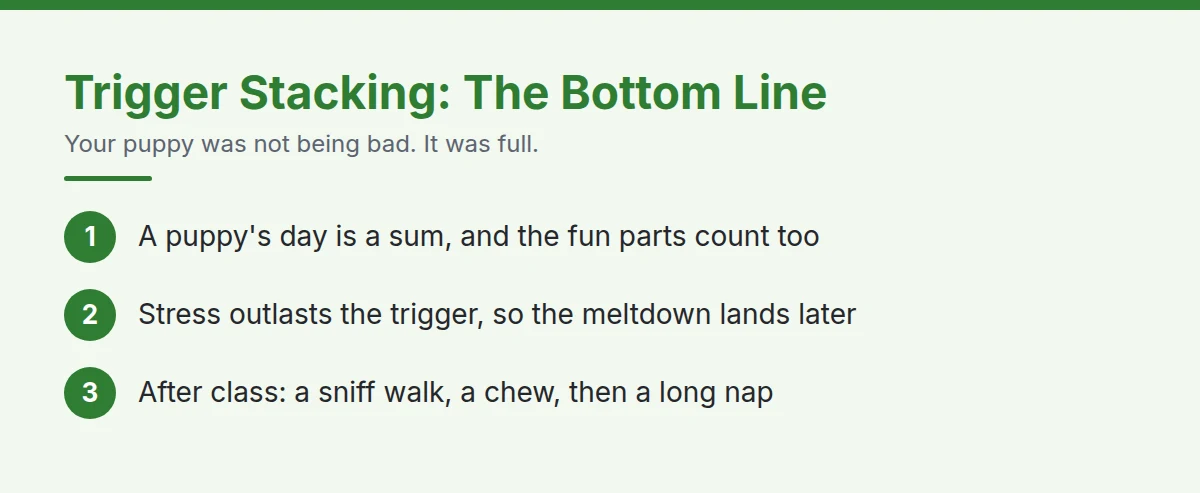
A puppy’s day is a sum, not a string of separate events. Vet visits, visitors, car rides, class and even the fun parts all fill the same cup, and stress takes time to drain after each one, which is why the meltdown so often lands hours after class. Watch for the quiet signals before the loud ones. Make class the only big thing that day, follow it with a sniff, a chew and a long nap, and keep the next day easy. Your puppy was not being bad. It was full.
Further reading (sources)
- American Kennel Club on what trigger stacking is and why recovery time matters
- Lensen, Moons and Diederich with puppies’ stress markers 10 and 40 minutes after a home test
- Mariti and colleagues for which stress signals 1,190 owners do and do not recognize
- Duranton and Horowitz on daily nosework making pet dogs more optimistic
- Whole Dog Journal with a veterinarian on chewing as a way to settle
- Kis and colleagues about how a stressful session changed dogs’ sleep afterward
- American Veterinary Society of Animal Behavior on socializing puppies without over-stimulation
- Kate Mornement, PhD, CAAB for stress as a spectrum from mild to extreme
- Mills and colleagues from a review of pain behind problem behavior in dogs and cats